English
 Español
 tiếng việt
 русский
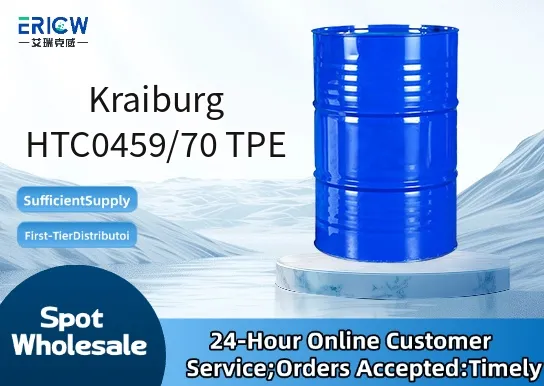
Excellent soft-touch feel with Shore A 70 hardness for ergonomic handling and user comfort.
Outstanding adhesion to polypropylene (PP) and polyethylene (PE) without primer or surface treatment.
Good processability via injection molding and extrusion, enabling high-cycle production efficiency.
Enhanced thermal stability with continuous use temperature up to 100 °C.
Compliant with RoHS and REACH regulations, supporting sustainable and safe manufacturing.
Overmolded grips for power tools and hand-held appliances.
Soft-touch automotive interior components including trim inserts and control knobs.
Sealing and gasketing solutions for consumer electronics enclosures.
Ergonomic handles for medical devices requiring tactile feedback and chemical resistance.
Flexible connectors and cable jacketing in industrial equipment.
| Chemical Type | Thermoplastic Elastomer (TPE), SEBS-based |
| Product Form | Pellets |
| Appearance | Opaque, light beige granules |
| Shore A Hardness | 70 ± 3 |
| Density (g/cm³) | 0.92 |
| Melt Flow Rate (230 °C/2.16 kg) | 18 g/10 min |
| Continuous Use Temperature | Up to 100 °C |
| Key Features | PP/PE adhesion, soft-touch, thermal stability, halogen-free |
Q1: What is the primary function of Kraiburg HTC0459/70 TPE in thermoplastic elastomer formulations?
A: HTC0459/70 TPE is a high-performance processing aid and compatibilizer designed to improve melt flow, reduce extrusion pressure, and enhance surface finish in TPE compounds—particularly in SEBS- and TPE-S-based systems.
Q2: Is HTC0459/70 TPE compatible with common TPE base polymers such as SEBS, TPE-V, and TPE-E?
A: Yes—it exhibits broad compatibility with styrenic block copolymers (SEBS, SBS), thermoplastic vulcanizates (TPE-V), and certain polyester-based TPEs (TPE-E), though optimal performance is typically observed in SEBS-rich formulations.
Q3: How should HTC0459/70 TPE be incorporated into a TPE compound during processing?
A: It is typically added directly to the base polymer during compounding—either via side-feeding or pre-blending—and disperses readily under standard twin-screw extrusion conditions. No pre-drying is required.
Q4: Does HTC0459/70 TPE affect the mechanical properties or thermal stability of the final TPE product?
A: When used within recommended dosage ranges, it does not significantly compromise tensile strength, elongation, or thermal resistance; instead, it often supports more consistent rheological behavior and improved processability without sacrificing end-use performance.
Contact With Us:
E-mail: wangxingqiang@ericwchem.com
Have a Questions? Call Us:
Add:
Building A1, Jiete Industrial Park, Huangpu District, Guangzhou City, Guangdong Province, China