English
 Español
 tiếng việt
 русский
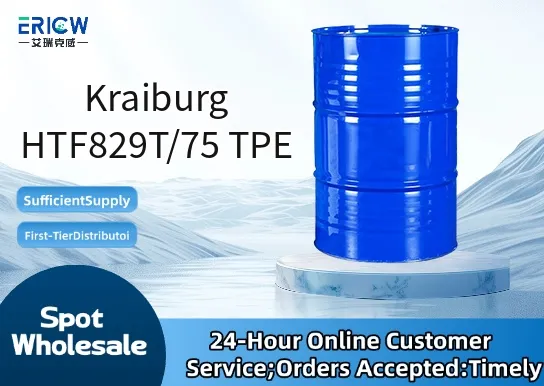
Thermoplastic elastomer (TPE) based on thermoplastic polyolefin (TPO) technology for excellent processability and recyclability.
Optimized hardness of 75 Shore A, delivering balanced flexibility, resilience, and compression set resistance.
Good UV and weathering stability, suitable for outdoor applications without requiring additional stabilizer packages.
Low extractables and compliant with FDA 21 CFR §177.2600 for indirect food contact applications.
Excellent adhesion to polypropylene (PP) and polyethylene (PE), enabling reliable overmolding in multi-material assemblies.
Automotive interior trim components including soft-touch door panels and instrument cluster surrounds.
Consumer appliance grips and seals for washing machines, vacuum cleaners, and power tools.
Outdoor furniture components requiring weather-resistant, tactile-surface materials.
Medical device housings and non-sterile ergonomic handles where biocompatibility and cleanability are critical.
Industrial packaging gaskets and reusable container seals demanding chemical resistance and long-term sealing performance.
| Chemical Type | Thermoplastic Polyolefin (TPO)-based TPE |
| Product Form | Pellets |
| Appearance | Off-white, free-flowing granules |
| Hardness (Shore A) | 75 ± 3 |
| Density (g/cm³) | 0.89–0.91 |
| Melt Flow Rate (230°C/2.16 kg, g/10 min) | 12–18 |
| Key Features | PP/PE adhesion, low extractables, UV-stabilized |
| Compliance | FDA 21 CFR §177.2600, RoHS, REACH SVHC-free |
Q1: What is the primary application domain for HTF829T/75?
A: HTF829T/75 is a thermoplastic elastomer specifically engineered for soft-touch overmolding of rigid substrates such as PP, ABS, and PC—commonly used in automotive interior components, consumer electronics housings, and medical device grips where tactile comfort and bonding reliability are critical.
Q2: Does HTF829T/75 require drying before processing?
A: Yes—like most hygroscopic TPEs, HTF829T/75 should be dried prior to melt processing. A standard recommendation is 2–4 hours at 60–70 °C using a desiccant dryer, with moisture content maintained below 0.1% to ensure optimal surface quality and mechanical performance.
Q3: How does HTF829T/75 achieve adhesion to polypropylene substrates?
A: It features a tailored polyolefin-based architecture with optimized polarity and melt rheology, enabling strong interfacial compatibility and mechanical anchoring during two-shot injection molding—no primer or surface treatment is typically required for PP substrates.
Q4: Is HTF829T/75 suitable for applications requiring skin contact or low extractables?
A: HTF829T/75 is formulated without halogenated flame retardants, heavy metals, or regulated phthalates, and is widely selected for skin-contact applications where low odor and low volatility are priorities—though final compliance with specific regulatory frameworks must be verified per end-use formulation and processing conditions.
Contact With Us:
E-mail: wangxingqiang@ericwchem.com
Have a Questions? Call Us:
Add:
Building A1, Jiete Industrial Park, Huangpu District, Guangzhou City, Guangdong Province, China