English
 Español
 tiếng việt
 русский
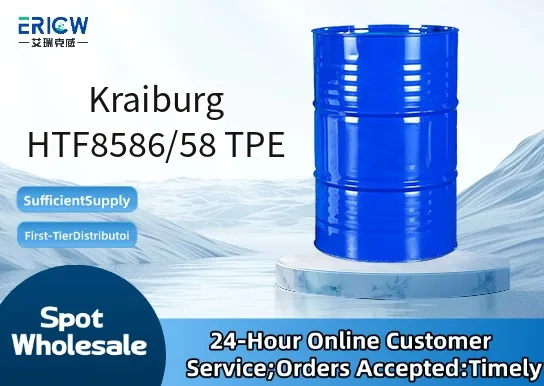
Excellent thermal stability for continuous use up to 100 °C.
Outstanding resistance to oils, greases, and common automotive fluids.
Good compression set performance ensuring long-term sealing integrity.
Easy processing via injection molding and extrusion without pre-drying.
Halogen-free formulation compliant with RoHS and REACH requirements.
Automotive under-hood seals and gaskets.
Fluid-handling connectors and hose end fittings.
Industrial fluid system components exposed to moderate heat and chemicals.
Replacement material for thermoset rubber in dynamic sealing applications.
| Chemical Type | Thermoplastic Elastomer (TPE) — TPV (Thermoplastic Vulcanizate) |
| Product Form | Pellets |
| Appearance | Black, non-dusting granules |
| Primary Applications | Dynamic and static sealing in automotive and industrial fluid systems |
| Key Features | Oil resistance, heat resistance, compression set retention, halogen-free |
| Processing Method | Injection molding, extrusion |
| Standard Compliance | RoHS 2011/65/EU, REACH SVHC-free |
Q1: What is the primary function of HTF8586/58 in TPE formulations?
A: HTF8586/58 is a high-performance processing aid and flow modifier designed to improve melt homogeneity, reduce extrusion torque, and enhance surface finish in thermoplastic elastomer compounds—particularly in styrenic (TPE-S) and thermoplastic polyolefin (TPO) systems.
Q2: Is HTF8586/58 compatible with common TPE base polymers such as SEBS or TPE-V?
A: Yes, HTF8586/58 demonstrates broad compatibility with major TPE base resins including SEBS, SBS, TPV (EPDM/PP), and TPE-E, supporting stable dispersion without phase separation or blooming under standard compounding conditions.
Q3: How should HTF8586/58 be incorporated into the formulation process?
A: It is typically added during the masterbatch stage or dry-blended with polymer and fillers prior to extrusion. For optimal dispersion, it is recommended to use moderate shear and avoid excessive residence time at elevated temperatures above 220 °C.
Q4: Does HTF8586/58 affect the mechanical properties of the final TPE compound?
A: When used within typical dosage ranges, HTF8586/58 maintains key performance attributes—including tensile strength, elongation, and hardness—while improving processability. Significant over-dosing may reduce crosslink density in dynamically vulcanized systems and should be avoided.
Contact With Us:
E-mail: wangxingqiang@ericwchem.com
Have a Questions? Call Us:
Add:
Building A1, Jiete Industrial Park, Huangpu District, Guangzhou City, Guangdong Province, China