English
 Español
 tiếng việt
 русский
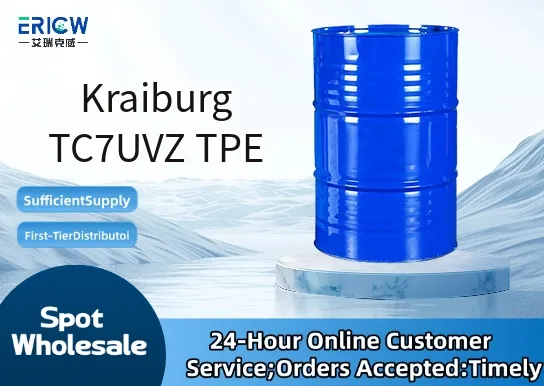
UV-stabilized thermoplastic elastomer specifically engineered for long-term outdoor exposure.
Excellent resistance to weathering, ozone, and thermal aging without surface cracking or discoloration.
Good processability on standard injection molding and extrusion equipment with low melt viscosity.
Halogen-free formulation compliant with RoHS and REACH regulatory requirements.
Soft-touch surface finish with consistent Shore A hardness (75–80) across production batches.
Outdoor automotive trim components including grilles, mirror housings, and body-side moldings.
Weather-resistant seals and gaskets for building façade systems and solar panel frames.
Exterior consumer electronics enclosures requiring durable, tactile, and UV-resistant overmolding.
Industrial hose covers and protective jacketing exposed to sunlight and ambient temperature fluctuations.
| Chemical Type | Thermoplastic Elastomer (TPE), SEBS-based |
| Product Form | Natural-colored pellets |
| Appearance | Opaque, uniform granules with slight matte surface |
| Shore A Hardness (ASTM D2240) | 77 ± 3 |
| Density (ASTM D792) | 0.98 g/cm³ |
| Melt Flow Rate (230°C/2.16 kg, ASTM D1238) | 12–16 g/10 min |
| Continuous Use Temperature Range | −40°C to +80°C |
| Compliance | RoHS 2015/863/EU, REACH SVHC-free, halogen-free |
Q1: What is the primary function of Kraiburg TC7UVZ TPE in thermoplastic elastomer formulations?
A: TC7UVZ TPE is a UV-stabilized, peroxide-curable thermoplastic elastomer designed to enhance weather resistance and long-term surface integrity in exposed TPE applications—particularly where outdoor durability and gloss retention are critical.
Q2: Is TC7UVZ TPE compatible with common TPE base polymers such as SEBS, TPU, or PP/EPDM blends?
A: Yes, TC7UVZ TPE is formulated for broad compatibility with major TPE matrix systems including SEBS, TPU, and thermoplastic vulcanizates (TPVs), enabling homogeneous dispersion and effective UV protection without compromising melt processability or mechanical performance.
Q3: How does TC7UVZ TPE differ from conventional UV absorbers or HALS additives?
A: Unlike low-molecular-weight additives, TC7UVZ TPE is a polymeric, reactive UV stabilizer that integrates into the TPE matrix via peroxide crosslinking—providing superior migration resistance, thermal stability during processing, and sustained protection throughout the product lifecycle.
Q4: What processing methods are recommended for incorporating TC7UVZ TPE into finished compounds?
A: TC7UVZ TPE is typically introduced during compounding via twin-screw extrusion under standard TPE processing conditions. It exhibits good thermal stability up to typical melt temperatures (180–230 °C) and requires no pre-drying prior to use.
Q5: Can TC7UVZ TPE be used in applications requiring regulatory compliance for food contact or skin contact?
A: TC7UVZ TPE is not pre-approved for direct food-contact or medical applications. Its suitability for regulated end-uses depends on full formulation evaluation, final product testing, and compliance verification by the compounder or end-user against applicable regional requirements.
Contact With Us:
E-mail: wangxingqiang@ericwchem.com
Have a Questions? Call Us:
Add:
Building A1, Jiete Industrial Park, Huangpu District, Guangzhou City, Guangdong Province, China