English
 Español
 tiếng việt
 русский
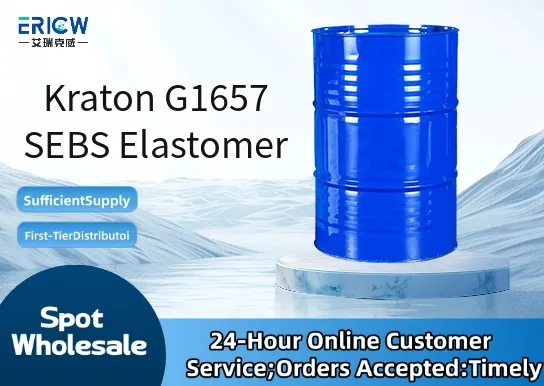
High melt flow index for excellent processability in extrusion and injection molding.
Outstanding elasticity and recovery performance at room and elevated temperatures.
Excellent compatibility with polypropylene (PP) and polyethylene (PE) for thermoplastic vulcanizate (TPV) formulations.
Good UV and thermal stability, supporting long-term outdoor and automotive under-hood applications.
Low extractables and compliant with FDA 21 CFR §177.2600 for food-contact-compatible compounds (when compounded appropriately).
Automotive interior trim components including soft-touch dashboards and door panels.
Medical tubing and device overmolding requiring biocompatibility and flexibility.
Consumer electronics seals, gaskets, and protective grips.
Footwear midsoles and outsole compounds for enhanced cushioning and wear resistance.
Packaging films and closures requiring seal integrity and elastic recovery.
| Chemical Type | Styrene–ethylene/butylene–styrene (SEBS) triblock copolymer |
| Product Form | Pellets |
| Appearance | Off-white to light tan, free-flowing pellets |
| Primary Applications | Thermoplastic elastomer (TPE) compounding, PP/SEBS TPVs, soft-touch overmolding |
| Key Features | High melt flow, excellent elasticity, PP compatibility, low extractables |
| Benefits | Improved processing efficiency, superior part definition, reduced cycle times, enhanced surface aesthetics |
| Processing Method | Extrusion, injection molding, blow molding |
| Storage Conditions | Store in cool, dry location; protect from moisture and direct sunlight |
Q1: What are the key processing advantages of Kraton G1657 compared to other SEBS grades?
A: Kraton G1657 offers excellent melt flow and low viscosity in molten state, enabling efficient processing via injection molding, extrusion, and overmolding—especially onto polypropylene and other polyolefins. Its balanced triblock architecture provides good thermal stability and reduced die swell, supporting consistent part geometry and surface finish.
Q2: Can Kraton G1657 be used in soft-touch applications requiring skin-friendly feel and low extractables?
A: Yes—Kraton G1657 is widely selected for soft-touch overmolding and consumer product grips due to its low inherent odor, minimal volatile content, and smooth tactile profile. It exhibits low migration tendency when compounded with appropriate stabilizers and is compatible with many FDA-compliant additive systems for non-food-contact applications.
Q3: How does Kraton G1657 perform in blends with polypropylene (PP) or polyethylene (PE)?
A: Kraton G1657 functions effectively as a thermoplastic elastomer modifier in PP and PE blends, improving impact resistance, flexibility, and stress whitening resistance without significantly compromising stiffness. It demonstrates good interfacial adhesion in compatibilized systems and is often used at low concentrations to tailor modulus and elongation behavior.
Q4: Is Kraton G1657 suitable for medical device components?
A: Kraton G1657 is not pre-qualified for direct, long-term implantable or critical fluid-path medical applications. However, it is used in certain non-implantable, short-term contact medical device housings and ergonomic components where biocompatibility testing (e.g., USP Class VI, ISO 10993 screening) has been successfully completed on the final formulated compound.
Contact With Us:
E-mail: wangxingqiang@ericwchem.com
Have a Questions? Call Us:
Add:
Building A1, Jiete Industrial Park, Huangpu District, Guangzhou City, Guangdong Province, China