English
 Español
 tiếng việt
 русский
High melt flow index for excellent processability in extrusion and injection molding
Outstanding thermal stability and low compression set for durable elastic performance
Excellent compatibility with polypropylene (PP) and polyethylene (PE) for thermoplastic vulcanizate (TPV) formulations
Good UV resistance and weatherability without requiring additional stabilizers
Low odor and low extractables, suitable for sensitive applications including consumer-facing products
Soft-touch overmolding for automotive interior components
Flexible grips and ergonomic handles for power tools and consumer electronics
Sealing profiles and gaskets for building & construction applications
Medical device tubing and non-sterile wearable components
Thermoplastic elastomer (TPE) compounds for industrial hoses and fluid handling systems
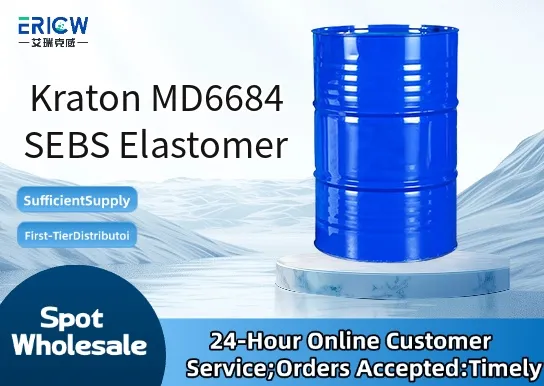
| Chemical Type | Styrene–Ethylene/Butylene–Styrene (SEBS) triblock copolymer |
| Product Form | Pellets |
| Appearance | Off-white to light tan, free-flowing pellets |
| Primary Applications | Thermoplastic elastomer compounds, soft-touch overmolding, flexible seals |
| Key Features | High melt flow, PP/PE compatibility, low compression set, UV stable |
| Benefits | Enhanced processing efficiency, improved part durability, reduced formulation complexity |
| Processing Method | Extrusion, injection molding, two-shot molding |
| Storage Conditions | Store in dry, cool conditions; protect from direct sunlight and moisture |
Q1: What is the primary functional role of Kraton MD6684 in polymer formulations?
A: Kraton MD6684 is a styrenic block copolymer (SEBS) elastomer designed primarily as a compatibilizer and impact modifier in thermoplastic blends—especially for enhancing toughness, melt elasticity, and phase adhesion between immiscible polymers such as polypropylene and polar resins.
Q2: Is Kraton MD6684 suitable for food-contact or medical applications?
A: Kraton MD6684 is not pre-qualified for direct food-contact or medical device applications. Its use in regulated end uses requires full formulation-level evaluation—including extractables/leachables testing and compliance verification with applicable regional regulatory frameworks by the end-user.
Q3: How does Kraton MD6684 differ from linear SBS or other SEBS grades in processing behavior?
A: As a selectively hydrogenated triblock SEBS with mid-block saturation, MD6684 offers improved thermal stability, oxidative resistance, and lower melt viscosity compared to SBS—enabling smoother extrusion and injection molding. Its triblock architecture also supports stronger physical network formation than diblock variants, contributing to better melt strength and elastic recovery.
Q4: What are typical dosage ranges when using Kraton MD6684 as a modifier in PP-based compounds?
A: Dosage depends on the target performance balance, but Kraton MD6684 is typically used at low concentrations—generally ranging from 0.1% to 2% by weight—in polypropylene systems where improved impact resistance, flexibility, or surface aesthetics are desired without significantly compromising stiffness or processability.
Contact With Us:
E-mail: wangxingqiang@ericwchem.com
Have a Questions? Call Us:
Add:
Building A1, Jiete Industrial Park, Huangpu District, Guangzhou City, Guangdong Province, China