English
 Español
 tiếng việt
 русский
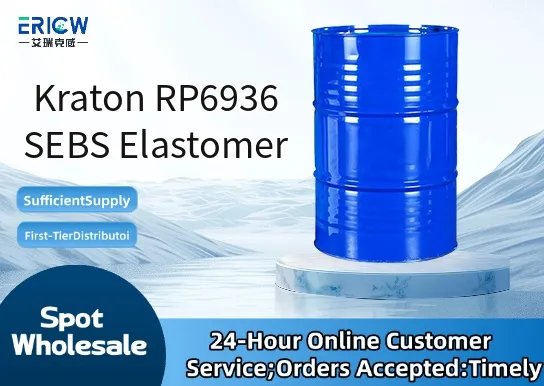
High melt strength and excellent melt stability for robust extrusion and thermoforming processes.
Outstanding soft-touch feel and low surface tack, ideal for consumer-facing elastomeric components.
Good UV and thermal aging resistance, enabling durable performance in outdoor and elevated-temperature applications.
Compatible with polypropylene (PP) and polyethylene (PE), facilitating easy blending and recyclability in TPO formulations.
Low extractables and compliant with FDA 21 CFR §177.1210 for food-contact–compatible compounds (when compounded appropriately).
Soft-grip overmolding for power tools, personal care devices, and medical hand-held instruments.
Thermoplastic olefin (TPO) modifiers for automotive interior trim, including door panels and instrument bezels.
Flexible, non-slip grips for sports equipment, bicycle handles, and ergonomic consumer products.
Sealants and gasket compounds requiring low compression set and consistent elasticity at ambient temperatures.
Medical tubing and device housings where biocompatibility support and sterilization resistance are critical.
| Chemical Type | Styrene–ethylene/butylene–styrene (SEBS) triblock copolymer |
| Product Form | Pellets |
| Appearance | Off-white to light tan, free-flowing pellets |
| Primary Applications | TPO modification, soft-touch overmolding, flexible seals, medical device components |
| Key Features | High melt strength, low surface tack, PP/PE compatibility, FDA-supportive formulation |
| Benefits | Enhanced processability, improved aesthetics and haptics, reduced part warpage, recyclable in compatible streams |
| Processing Method | Extrusion, injection molding, two-shot molding, blow molding |
Q1: What is the primary function of Kraton RP6936 in polymer formulations?
A: Kraton RP6936 is a selectively hydrogenated styrenic block copolymer (SEBS) elastomer used primarily as a compatibilizer and impact modifier in thermoplastic blends—especially in polypropylene (PP) and polyethylene (PE) systems—to improve toughness, flexibility, and melt processability without significantly compromising stiffness.
Q2: Is Kraton RP6936 suitable for medical or food-contact applications?
A: Kraton RP6936 is not pre-qualified for regulated medical device or food-contact use. Its suitability for such applications depends on full formulation evaluation, including extractables/leachables testing and compliance with relevant regional regulatory requirements—end users must conduct their own qualification per intended use and processing conditions.
Q3: How does Kraton RP6936 differ from conventional SEBS grades in terms of processing behavior?
A: RP6936 features a balanced molecular architecture that provides enhanced thermal stability and lower melt viscosity compared to many standard SEBS grades, enabling smoother extrusion and injection molding—particularly in high-output compounding lines where consistent dispersion and reduced shear sensitivity are critical.
Q4: What are typical dosage levels of Kraton RP6936 in PP-based impact modification systems?
A: Dosage is formulation-dependent, but Kraton RP6936 is typically used at low concentrations—generally ranging from 0.1% to 2% by weight in PP homopolymer or copolymer systems—to achieve meaningful improvements in low-temperature impact resistance and ductility.
Contact With Us:
E-mail: wangxingqiang@ericwchem.com
Have a Questions? Call Us:
Add:
Building A1, Jiete Industrial Park, Huangpu District, Guangzhou City, Guangdong Province, China