English
 Español
 tiếng việt
 русский
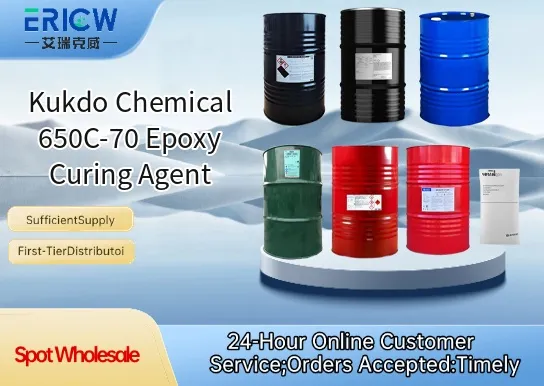
Fast-reacting aliphatic amine-based curing agent for room-temperature and elevated-temperature epoxy systems.
Excellent compatibility with standard DGEBA-type epoxy resins, enabling uniform crosslinking without phase separation.
Low viscosity (≈150–250 cP at 25°C) ensures easy handling, precise metering, and superior wetting of fillers and substrates.
Provides high glass transition temperature (Tg > 85°C) and robust mechanical properties in cured networks.
Low volatility and low skin sensitization potential compared to conventional primary amines, supporting safer industrial handling.
Structural adhesives for automotive and transportation bonding applications.
Electrical encapsulants and potting compounds requiring thermal stability and dielectric integrity.
High-performance composite matrix resins for wind blade and aerospace prepregs.
Industrial flooring and heavy-duty protective coatings for chemical plants and warehouses.
Repair mortars and grouts where rapid strength development and moisture tolerance are critical.
| Chemical Type | Aliphatic polyamine adduct |
| Product Form | Liquid |
| Appearance | Clear, pale yellow liquid |
| Specific Gravity (25°C) | 0.94–0.97 g/cm³ |
| Viscosity (25°C) | 180–220 cP |
| Amine Value | 380–420 mg KOH/g |
| Reactivity Profile | Medium-fast cure (gel time ≈ 30–50 min at 25°C with 100 phr DGEBA) |
| Storage Stability | ≥12 months in sealed container at <25°C |
Q1: What is the primary chemical class of 650C-70?
A: 650C-70 is an aliphatic polyamine-based epoxy curing agent, designed to provide balanced reactivity, low viscosity, and good compatibility with standard bisphenol-A and bisphenol-F epoxy resins.
Q2: Is 650C-70 suitable for ambient-cure applications?
A: Yes — it is formulated for effective ambient-temperature curing, delivering practical handling time and reasonable gelation onset under typical workshop conditions, though full property development may benefit from mild post-cure.
Q3: How does 650C-70 compare to conventional DETA or TETA in terms of amine volatility and handling safety?
A: 650C-70 exhibits significantly lower vapor pressure and reduced skin sensitization potential compared to low-molecular-weight aliphatic amines like DETA or TETA, making it more suitable for industrial formulations where operator exposure control is a priority.
Q4: Can 650C-70 be used in high-solids or solvent-free epoxy systems?
A: Yes — its low viscosity and good miscibility allow it to function effectively in high-solids and 100% solids epoxy formulations, supporting efficient mixing and reduced VOC content without compromising cure kinetics or final film integrity.
Q5: What are typical storage and shelf-life considerations for 650C-70?
A: Store in tightly sealed containers under dry, cool conditions away from moisture and strong oxidizers. When stored properly, the recommended shelf life is at least 12 months from date of manufacture.
Contact With Us:
E-mail: wangxingqiang@ericwchem.com
Have a Questions? Call Us:
Add:
Building A1, Jiete Industrial Park, Huangpu District, Guangzhou City, Guangdong Province, China