English
 Español
 tiếng việt
 русский
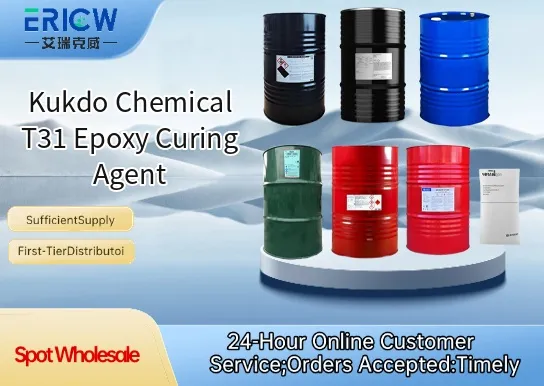
Fast-reacting aliphatic amine-based curing agent for ambient-cure epoxy systems.
Enables excellent adhesion to metals, concrete, and composite substrates.
Provides good chemical resistance to alkalis, solvents, and mild acids after full cure.
Low viscosity ensures easy handling, precise metering, and thorough mixing with epoxy resins.
Non-crystallizing formulation maintains consistent performance across storage temperatures.
Industrial flooring and concrete repair mortars.
Structural adhesives for metal-to-metal and metal-to-composite bonding.
Protective coatings for steel infrastructure and marine equipment.
Epoxy grouts and anchoring systems in construction and civil engineering.
Electrical encapsulation and potting compounds requiring rapid turnaround.
| Chemical Type | Aliphatic polyamine adduct |
| Product Form | Liquid |
| Appearance | Amber to light brown transparent liquid |
| Density (25°C) | 0.92–0.96 g/cm³ |
| Viscosity (25°C) | 200–400 mPa·s |
| Amine Value | 380–420 mg KOH/g |
| Reactivity Profile | Room temperature cure (20–25°C), gel time ~30–60 min (with DGEBA resin) |
| Storage Stability | 12 months in original sealed container at 15–25°C |
Q1: What is the primary function of T31 in epoxy systems?
A: T31 is a reactive amine-based curing agent designed to initiate and drive the crosslinking reaction of liquid epoxy resins, enabling the formation of thermoset networks with enhanced mechanical strength, chemical resistance, and adhesion.
Q2: Is T31 suitable for ambient-cure applications?
A: Yes — T31 is specifically formulated for room-temperature curing of standard bisphenol-A epoxy resins, making it well-suited for coatings, adhesives, and repair mortars where heat curing is impractical or undesirable.
Q3: How does T31 compare to conventional aliphatic amines in terms of pot life and reactivity?
A: T31 offers a balanced profile: longer working time than highly reactive aliphatic amines like DETA or DEEDA, yet faster cure development than slower polyamide types — supporting good handling characteristics without excessive delay in achieving initial hardness.
Q4: Can T31 be used in high-solids or solvent-free epoxy formulations?
A: Yes — T31 is fully miscible with common liquid epoxy resins and exhibits low volatility, supporting its use in low-VOC and 100%-solids systems commonly employed in industrial flooring, marine coatings, and structural bonding.
Q5: What safety and handling precautions should be observed when using T31?
A: As with most amine curing agents, T31 may cause skin and eye irritation and sensitization upon repeated exposure. Users should wear appropriate PPE (gloves, goggles, respiratory protection if mist/aerosol is generated), ensure adequate ventilation, and consult the latest Safety Data Sheet prior to handling or formulation.
Contact With Us:
E-mail: wangxingqiang@ericwchem.com
Have a Questions? Call Us:
Add:
Building A1, Jiete Industrial Park, Huangpu District, Guangzhou City, Guangdong Province, China