English
 Español
 tiếng việt
 русский
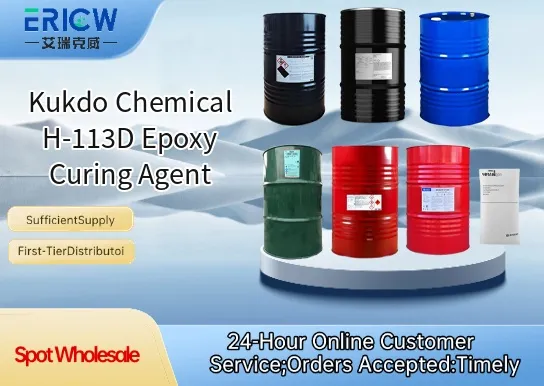
Low-viscosity aliphatic amine-based curing agent enabling excellent processability and easy metering/mixing.
Fast room-temperature cure with good early strength development, suitable for high-throughput production environments.
Superior adhesion to diverse substrates including metals, concrete, and composite laminates.
Low volatility and reduced amine blush tendency compared to conventional aliphatic amines, improving surface quality.
Compatible with standard DGEBA-type epoxy resins and supports flexible formulation across coating, adhesive, and composite systems.
High-performance industrial maintenance coatings for steel structures and offshore platforms.
Structural adhesives for automotive assembly and lightweight composite bonding.
Flooring systems requiring rapid return-to-service in commercial and manufacturing facilities.
Electrical encapsulation and potting compounds where low exotherm and dimensional stability are critical.
Wind turbine blade bonding and repair formulations demanding reliable ambient-cure performance.
| Chemical Type | Aliphatic polyamine adduct |
| Product Form | Liquid |
| Appearance | Pale yellow to light amber clear liquid |
| Density (25°C) | 0.92–0.96 g/cm³ |
| Viscosity (25°C) | 150–300 mPa·s |
| Amine Value | 380–420 mg KOH/g |
| Primary Applications | Epoxy coatings, structural adhesives, flooring, composites |
| Key Features | Room-temperature cure, low blush, good substrate wetting, low odor |
Q1: What is the primary chemical class of H-113D?
A: H-113D is a modified aliphatic amine-based epoxy curing agent, designed to offer balanced reactivity, low volatility, and improved compatibility with standard bisphenol-A and bisphenol-F epoxy resins.
Q2: Is H-113D suitable for ambient-cure applications?
A: Yes — H-113D is formulated to enable effective ambient-temperature curing of epoxy systems, though full property development may benefit from mild thermal post-cure depending on film thickness and environmental conditions.
Q3: How does H-113D compare to conventional DETA or DEEDA in terms of handling safety?
A: H-113D exhibits significantly lower volatility and reduced skin sensitization potential compared to unmodified aliphatic amines, making it safer to handle in industrial environments — however, standard PPE (gloves, eye protection, ventilation) remains essential during use.
Q4: Can H-113D be used in high-solids or solvent-free epoxy formulations?
A: Yes — H-113D is fully compatible with low-VOC and 100% solids epoxy systems, and its viscosity and miscibility support homogeneous blending without excessive shear or heating requirements.
Q5: What is the typical dosage range for H-113D in standard epoxy formulations?
A: Dosage is formulation-dependent but generally ranges from 0.1% to 2% by weight relative to the epoxy resin, with optimal levels determined through small-scale trials evaluating pot life, cure speed, and final mechanical performance.
Contact With Us:
E-mail: wangxingqiang@ericwchem.com
Have a Questions? Call Us:
Add:
Building A1, Jiete Industrial Park, Huangpu District, Guangzhou City, Guangdong Province, China