English
 Español
 tiếng việt
 русский
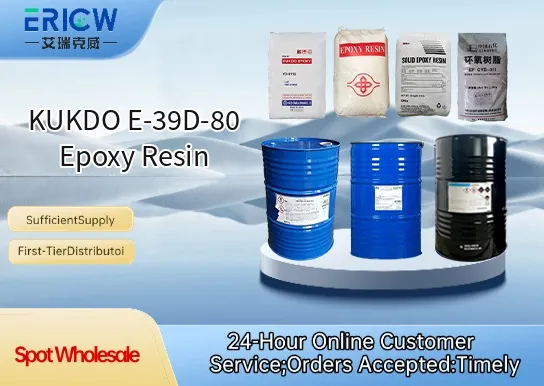
High reactivity with standard amine and anhydride curing agents for rapid gelation and short cycle times.
Excellent adhesion to metals, composites, and treated plastics without surface priming.
Low viscosity (8,000–12,000 cP at 25°C) enabling easy processing via casting, impregnation, and resin transfer molding.
Superior electrical insulation properties with high dielectric strength and volume resistivity.
Good thermal stability with glass transition temperature (Tg) of approximately 125–135°C after full cure.
Electrical encapsulation of transformers, reactors, and high-voltage insulators.
Structural adhesive formulations for aerospace composite bonding and automotive metal-to-composite joints.
Matrix resin for fiber-reinforced laminates in wind turbine blade root sections and marine components.
Casting and potting compounds for industrial sensors, power electronics modules, and LED lighting housings.
Prepreg impregnation in high-performance printed circuit board (PCB) base materials and multilayer substrates.
| Chemical Type | Diglycidyl ether of bisphenol-A (DGEBA) |
| Product Form | Liquid resin |
| Appearance | Pale yellow to amber transparent liquid |
| Epoxy Equivalent Weight (EEW) | 185–195 g/eq |
| Viscosity (25°C) | 8,000–12,000 cP |
| Chloride Content | ≤ 700 ppm |
| Volatiles Content | ≤ 0.3 wt% |
| Storage Stability | Stable for ≥ 12 months at 25°C in sealed containers |
Q1: What is the primary application of KUKDO E-39D-80 epoxy resin?
A: KUKDO E-39D-80 is primarily formulated for use in high-performance protective coatings and industrial maintenance systems, especially where enhanced chemical resistance, adhesion to metal substrates, and durability under thermal cycling are required.
Q2: How does E-39D-80 differ from standard bisphenol-A epoxy resins?
A: E-39D-80 is a modified liquid epoxy resin with tailored molecular weight distribution and reactivity profile, offering improved compatibility with amine hardeners and reduced viscosity compared to conventional solid or higher-MW liquid epoxies—facilitating easier processing in solvent-free or low-VOC formulations.
Q3: Is E-39D-80 suitable for food-contact coating applications?
A: While E-39D-80 itself is not inherently food-contact compliant, it may be incorporated into finished coating systems that meet relevant food safety regulations—subject to full formulation validation, appropriate hardener selection, and post-cure conditions. End-use compliance must be verified by the final system manufacturer.
Q4: What type of hardeners is E-39D-80 typically paired with?
A: E-39D-80 shows good reactivity with aliphatic and cycloaliphatic amines, as well as polyamide and amidoamine hardeners. Selection depends on desired pot life, cure schedule, and end-performance requirements such as flexibility or chemical resistance.
Q5: Does E-39D-80 require special handling or storage conditions?
A: Yes—store in tightly sealed containers at temperatures between 10°C and 30°C, away from moisture, direct sunlight, and strong oxidizing agents. Prolonged exposure to elevated temperatures or humidity may affect viscosity and shelf life.
Contact With Us:
E-mail: wangxingqiang@ericwchem.com
Have a Questions? Call Us:
Add:
Building A1, Jiete Industrial Park, Huangpu District, Guangzhou City, Guangdong Province, China