English
 Español
 tiếng việt
 русский
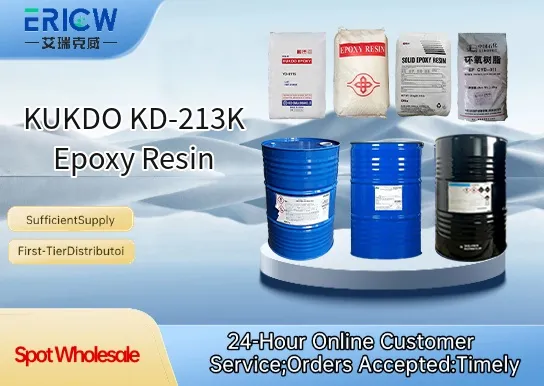
High reactivity with standard amine and anhydride curing agents for rapid gelation and short cycle times.
Excellent adhesion to metals, composites, and treated plastics without requiring primers.
Low viscosity (8,000–12,000 cP at 25°C) enabling easy processing, impregnation, and air release.
Superior thermal stability with glass transition temperature (Tg) up to 130°C after full cure.
Low chloride content (< 500 ppm), ensuring compatibility with sensitive electronic and aerospace components.
Structural adhesive formulations for automotive bonding and lightweight assembly.
Matrix resin for fiber-reinforced composites in wind turbine blades and sporting goods.
Encapsulation and potting compounds for power electronics and LED modules.
Electrical insulating varnishes for motor and transformer coil impregnation.
High-performance coating systems for corrosion-resistant industrial flooring and tank linings.
| Chemical Type | Bisphenol-A based liquid epoxy resin |
| Product Form | Clear, low-viscosity amber liquid |
| Appearance | Transparent to slightly yellow, homogeneous liquid |
| Epoxy Equivalent Weight (EEW) | 475–495 g/eq |
| Viscosity (25°C) | 8,000–12,000 cP |
| Chlorine Content | < 500 ppm |
| Softening Point | Not applicable (liquid at room temperature) |
| Storage Stability | 12 months at 20–25°C in sealed containers |
Q1: What is the primary application of KD-213K in epoxy systems?
A: KD-213K is a reactive diluent designed to reduce viscosity and improve processability of standard bisphenol-A or bisphenol-F based epoxy resins, particularly in coatings, adhesives, and electrical encapsulation formulations where lower VOC content and enhanced flow are required.
Q2: Is KD-213K compatible with common amine and anhydride curing agents?
A: Yes, KD-213K exhibits good compatibility with widely used aliphatic and cycloaliphatic amines, as well as aromatic amines and anhydride hardeners. It participates in the crosslinking reaction without significantly compromising thermal stability or mechanical performance of the cured network.
Q3: How does KD-213K affect the final cure properties compared to non-reactive diluents?
A: As a reactive diluent, KD-213K becomes part of the polymer backbone during curing, helping retain higher glass transition temperature (Tg), tensile strength, and chemical resistance—unlike non-reactive types which may volatilize or plasticize the matrix.
Q4: What safety considerations should be observed when handling KD-213K?
A: KD-213K should be handled using standard industrial hygiene practices for epoxy compounds: use appropriate PPE (gloves, eye protection, ventilation), avoid prolonged skin contact, and refer to the Safety Data Sheet (SDS) for detailed toxicological and handling guidance.
Contact With Us:
E-mail: wangxingqiang@ericwchem.com
Have a Questions? Call Us:
Add:
Building A1, Jiete Industrial Park, Huangpu District, Guangzhou City, Guangdong Province, China