English
 Español
 tiếng việt
 русский
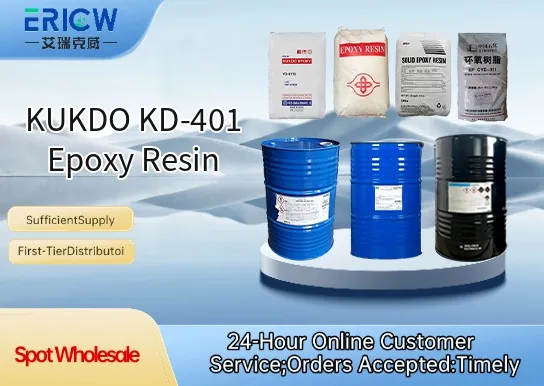
High-purity bisphenol-A based liquid epoxy resin with low ionic impurities.
Excellent compatibility with standard amine and anhydride curing agents.
Low viscosity (10,000–12,000 cP at 25°C) for enhanced processability and filler wetting.
Superior adhesion to metals, composites, and cured polymer substrates.
Good thermal stability and chemical resistance after full cure.
Structural adhesives for aerospace and automotive bonding.
Electrical encapsulation and potting compounds for power electronics.
High-performance composite matrices in wind turbine blades and sporting goods.
Coating resins for corrosion-resistant industrial linings and tank coatings.
Formulation base for advanced prepregs and filament-wound components.
| Chemical Type | Bisphenol-A epoxy resin |
| Product Form | Liquid |
| Appearance | Pale yellow, transparent liquid |
| Epoxy Equivalent Weight (EEW) | 185–192 g/eq |
| Viscosity (25°C) | 10,000–12,000 cP |
| Epoxide Content | 17.5–18.5 % by weight |
| Chloride Content | ≤ 500 ppm |
| Softening Point | 12–16°C |
Q1: What is the primary functional role of KD-401 in epoxy formulations?
A: KD-401 is a liquid bisphenol-A based epoxy resin designed primarily as a reactive diluent and viscosity modifier. It helps reduce formulation viscosity without significantly compromising crosslink density or thermal performance, supporting improved processability in coating, adhesive, and composite applications.
Q2: Is KD-401 compatible with standard amine and anhydride curing agents?
A: Yes, KD-401 exhibits broad compatibility with common aliphatic and aromatic amines, as well as cyclic anhydrides. Its reactivity profile supports predictable gel times and full cure development under conventional thermal conditions, though optimization of stoichiometry and cure schedule is recommended for each specific system.
Q3: How does KD-401 compare to conventional DGEBA resins in terms of flexibility and toughness?
A: As a lower-molecular-weight liquid epoxy, KD-401 contributes enhanced chain mobility during cure, which generally improves impact resistance and reduces brittleness compared to higher-viscosity solid DGEBA grades—especially when used in combination with flexibilizing modifiers or toughening agents.
Q4: Can KD-401 be used in food-contact or potable water applications?
A: KD-401 is not pre-certified for direct food-contact or potable water use. Its suitability for such applications depends entirely on final formulation compliance, full curing, and third-party verification against relevant regulatory frameworks. End-use approval must be validated by the formulator or end-user.
Contact With Us:
E-mail: wangxingqiang@ericwchem.com
Have a Questions? Call Us:
Add:
Building A1, Jiete Industrial Park, Huangpu District, Guangzhou City, Guangdong Province, China