English
 Español
 tiếng việt
 русский
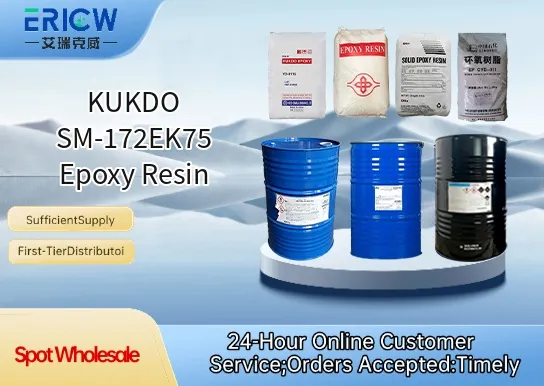
High-purity bisphenol-A based liquid epoxy resin with low chlorine content.
Excellent compatibility with standard amine and anhydride curing agents.
Optimized viscosity for efficient processing in casting, potting, and laminating applications.
Superior electrical insulation properties and thermal stability up to 130 °C continuous use.
Low volatile organic compound (VOC) emission, supporting industrial hygiene and regulatory compliance.
Electrical insulation systems for transformers and high-voltage switchgear.
Potting and encapsulation of electronic components and PCBs.
Structural adhesives for aerospace and automotive composite bonding.
Matrix resin in fiber-reinforced laminates for wind turbine blades and marine composites.
Casting compounds for precision industrial tooling and sensor housings.
| Chemical Type | Bisphenol-A epoxy resin |
| Product Form | Clear to pale yellow liquid |
| Appearance | Transparent, slightly viscous liquid at 25 °C |
| Epoxy Equivalent Weight (EEW) | 184–190 g/eq |
| Viscosity (25 °C) | 12,000–14,000 cP |
| Chlorine Content | ≤ 800 ppm |
| Volatiles Content | ≤ 0.3 wt% |
| Storage Stability | 12 months at ≤ 25 °C in sealed original container |
Q1: What is the primary application of KUKDO SM-172EK75 epoxy resin?
A: SM-172EK75 is a liquid bisphenol-A based epoxy resin designed primarily for use in high-performance protective coatings, especially for metal substrates requiring excellent chemical resistance, adhesion, and durability under demanding industrial or marine environments.
Q2: Is SM-172EK75 suitable for food-contact coating systems?
A: While SM-172EK75 meets general performance criteria for protective coatings, its suitability for food-contact applications depends on full system formulation, curing conditions, and compliance verification by the end-user against applicable regional regulatory requirements. It is not pre-certified for food contact on its own.
Q3: How does SM-172EK75 differ from standard DGEBA resins like EPON 828 or YD-128?
A: SM-172EK75 is engineered with a tailored molecular weight distribution and lower chloride content compared to many conventional liquid DGEBA resins, contributing to improved hydrolytic stability and reduced risk of corrosion promotion in coated metal systems.
Q4: What types of hardeners are commonly used with SM-172EK75?
A: SM-172EK75 is compatible with a broad range of amine-based hardeners—including aliphatic, cycloaliphatic, and aromatic amines—as well as anhydride and phenolic curing agents. Selection depends on desired cure profile, final film properties, and service temperature requirements.
Q5: Can SM-172EK75 be blended with other epoxy resins or modifiers?
A: Yes, SM-172EK75 is miscible with most common liquid and solid epoxy resins, as well as reactive diluents and flexibilizers. Blending is often employed to fine-tune viscosity, flexibility, or crosslink density—though compatibility and phase stability should be verified experimentally for each intended formulation.
Contact With Us:
E-mail: wangxingqiang@ericwchem.com
Have a Questions? Call Us:
Add:
Building A1, Jiete Industrial Park, Huangpu District, Guangzhou City, Guangdong Province, China