English
 Español
 tiếng việt
 русский
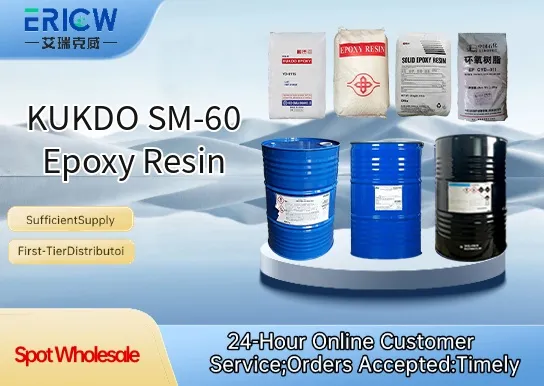
High-purity bisphenol-A based liquid epoxy resin with low ionic impurity content.
Excellent thermal stability and consistent reactivity with standard amine and anhydride hardeners.
Low viscosity (11,000–13,000 cP at 25°C) enabling easy processing and superior wetting of reinforcements.
Outstanding electrical insulation properties and low dielectric loss at elevated frequencies.
Compliant with RoHS and REACH regulations for restricted substances.
Electrical encapsulation and potting compounds for transformers, reactors, and high-voltage insulators.
Prepregs and laminates in printed circuit board (PCB) manufacturing.
Structural adhesives for aerospace composite bonding and automotive lightweight assemblies.
Wind turbine blade matrix resins requiring long gel time and controlled exotherm.
High-performance coatings for corrosion-resistant industrial tank linings and marine infrastructure.
| Chemical Type | Bisphenol-A epoxy resin |
| Product Form | Clear to pale yellow viscous liquid |
| Appearance | Homogeneous, transparent, free from gel or sediment |
| Epoxy Equivalent Weight (EEW) | 545–565 g/eq |
| Viscosity (25°C) | 11,000–13,000 cP |
| Softening Point | Not applicable (liquid at room temperature) |
| Chloride Content | ≤ 750 ppm |
| Volatiles Content | ≤ 0.3 wt% |
Q1: What is the primary function of KUKDO SM-60 in epoxy formulations?
A: KUKDO SM-60 is a reactive liquid diluent designed to reduce viscosity and improve processability of standard bisphenol-A based epoxy resins without significantly compromising final mechanical or thermal performance.
Q2: Is KUKDO SM-60 compatible with common amine and anhydride curing agents?
A: Yes, SM-60 demonstrates broad compatibility with aliphatic and aromatic amines, as well as cyclic anhydrides, and participates in the crosslinking reaction due to its epoxide functionality.
Q3: How does SM-60 compare to non-reactive diluents in terms of volatility and leaching risk?
A: As a reactive diluent, SM-60 becomes chemically bound into the polymer network during cure, resulting in lower volatility and significantly reduced potential for post-cure migration or leaching compared to non-reactive alternatives.
Q4: Can SM-60 be used in applications requiring FDA-compliant coatings or adhesives?
A: While SM-60 itself is not pre-approved under specific food-contact regulations, it may be considered for use in compliant systems when fully reacted and validated within a finished formulation meeting applicable regulatory requirements — consultation with regulatory experts and end-use testing is strongly recommended.
Contact With Us:
E-mail: wangxingqiang@ericwchem.com
Have a Questions? Call Us:
Add:
Building A1, Jiete Industrial Park, Huangpu District, Guangzhou City, Guangdong Province, China