English
 Español
 tiếng việt
 русский
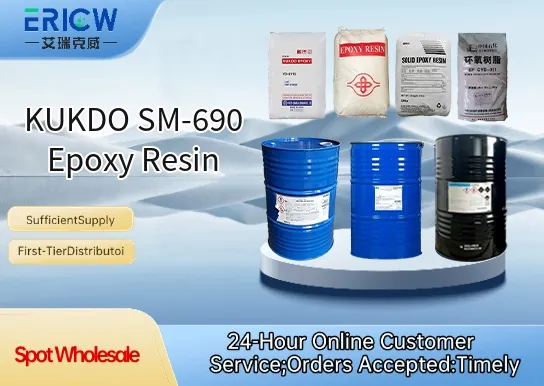
Highly reactive liquid bisphenol-A epoxy resin with excellent flow and wetting characteristics.
Low viscosity enables easy processing in casting, impregnation, and filament winding applications.
Superior adhesion to metals, composites, and fiber reinforcements without requiring surface priming.
Good thermal stability and chemical resistance after proper curing with amine or anhydride hardeners.
Consistent batch-to-batch quality compliant with ISO 9001 manufacturing standards.
Electrical insulation systems for transformers, reactors, and high-voltage bushings.
Structural composite matrices in wind turbine blades and aerospace secondary components.
Encapsulation and potting of power electronics and LED modules.
Filament-wound pressure vessels and corrosion-resistant piping systems.
High-performance adhesive formulations for metal-to-metal and metal-to-composite bonding.
| Chemical Type | Liquid Bisphenol-A Epoxy Resin |
| Product Form | Clear to pale yellow viscous liquid |
| Appearance | Transparent, slightly yellow, homogeneous |
| Epoxy Equivalent Weight (EEW) | 185–195 g/eq |
| Viscosity at 25°C | 12,000–16,000 cP |
| Softening Point | Not applicable (liquid at room temperature) |
| Chloride Content | ≤ 500 ppm |
| Volatiles Content | ≤ 0.3 wt% |
Q1: What is the primary functional role of KUKDO SM-690 in epoxy formulations?
A: KUKDO SM-690 is a reactive diluent designed to reduce viscosity and improve processability of standard bisphenol-A or bisphenol-F based epoxy resins without significantly compromising crosslink density or thermal performance.
Q2: Is KUKDO SM-690 suitable for high-gloss coating applications?
A: Yes — due to its low volatility, good compatibility with common epoxy curing agents, and ability to support excellent film formation, it is frequently selected in premium industrial and decorative coating systems where surface clarity and gloss retention are critical.
Q3: How does SM-690 compare to non-reactive diluents in terms of final cured properties?
A: Unlike non-reactive diluents, SM-690 participates in the curing reaction, helping maintain mechanical strength, chemical resistance, and glass transition temperature (Tg) — making it preferable for structural adhesives and high-performance coatings where long-term durability is required.
Q4: Can SM-690 be used in UV-curable epoxy systems?
A: No — SM-690 is formulated for thermally cured or ambient-cured amine-based epoxy systems. It is not compatible with free-radical UV curing mechanisms and lacks photoreactive functionality.
Contact With Us:
E-mail: wangxingqiang@ericwchem.com
Have a Questions? Call Us:
Add:
Building A1, Jiete Industrial Park, Huangpu District, Guangzhou City, Guangdong Province, China