English
 Español
 tiếng việt
 русский
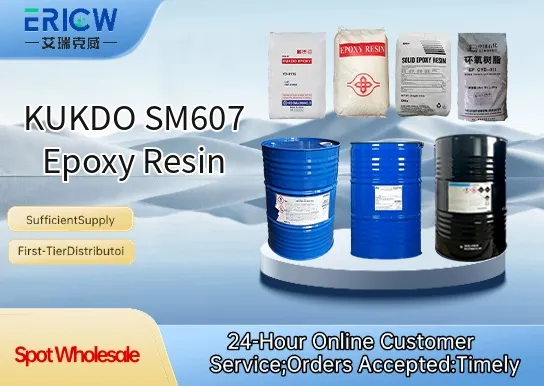
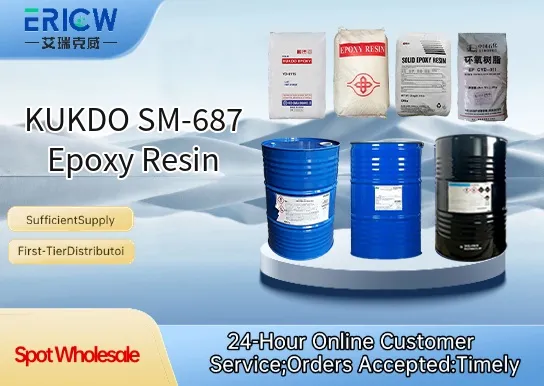
High reactivity with standard amine and anhydride curing agents for rapid gelation and short cycle times.
Excellent adhesion to metals, composites, and cured concrete substrates.
Low viscosity (12,000–15,000 cP at 25°C) enabling easy processing, impregnation, and air release.
Good chemical resistance to alkalis, dilute acids, and solvents after full cure.
Low volatile organic compound (VOC) content, supporting environmentally compliant manufacturing processes.
Electrical encapsulation and potting of transformers, sensors, and power electronics.
Structural adhesive formulations for automotive and aerospace composite bonding.
Matrix resin for filament-wound pressure vessels and FRP tanks.
High-performance coating systems for marine and offshore protective linings.
Tooling resins for mold making in wind turbine blade and automotive prototype production.
| Chemical Type | Bisphenol-A based liquid epoxy resin |
| Product Form | Clear to pale yellow viscous liquid |
| Appearance | Homogeneous, transparent, free of sediment or haze |
| Epoxy Equivalent Weight (EEW) | 184–190 g/eq |
| Viscosity (25°C) | 12,000–15,000 cP |
| Chloride Content | ≤ 500 ppm |
| Softening Point | Not applicable (liquid at room temperature) |
| Storage Stability | 12 months at ≤ 25°C in sealed containers |
Q1: What is the primary function of KUKDO SM607 in epoxy formulations?
A: KUKDO SM607 is a reactive diluent designed to reduce viscosity and improve processability of standard bisphenol-A or bisphenol-F based epoxy resins without significantly compromising final crosslink density or thermal performance.
Q2: Is KUKDO SM607 compatible with common amine and anhydride curing agents?
A: Yes, SM607 demonstrates good compatibility with aliphatic and cycloaliphatic amines, as well as aromatic amines and acid anhydrides commonly used in industrial coatings, adhesives, and composites applications.
Q3: How does SM607 compare to non-reactive diluents in terms of VOC and film properties?
A: As a reactive diluent, SM607 becomes chemically incorporated into the polymer network during cure, resulting in lower VOC emissions and superior hardness, chemical resistance, and adhesion compared to solvent- or non-reactive diluent–modified systems.
Q4: Can SM607 be used in high-performance composite laminates?
A: Yes — SM607 is frequently employed in fiber-reinforced composites where reduced resin viscosity enhances fiber wet-out and impregnation, while maintaining acceptable glass transition temperature and mechanical integrity in the cured matrix.
Q5: What handling precautions should be observed when working with SM607?
A: As with most epoxy functional materials, appropriate personal protective equipment—including nitrile gloves, safety goggles, and adequate ventilation—should be used during handling to minimize skin contact and inhalation of mists or vapors.
Contact With Us:
E-mail: wangxingqiang@ericwchem.com
Have a Questions? Call Us:
Add:
Building A1, Jiete Industrial Park, Huangpu District, Guangzhou City, Guangdong Province, China