English
 Español
 tiếng việt
 русский
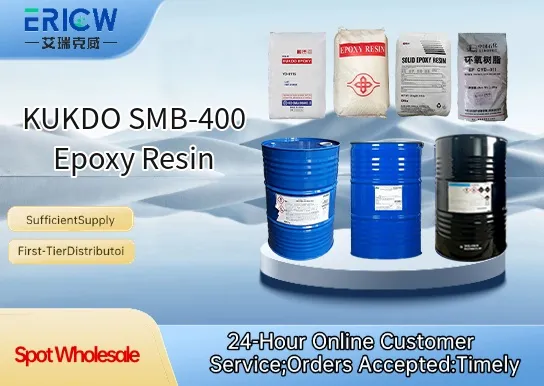
High reactivity with standard amine and anhydride curing agents for rapid gelation and short cycle times.
Excellent adhesion to metals, composites, and cured epoxy substrates without surface priming.
Low viscosity (12,000–15,000 cP at 25°C) enabling easy processing via casting, impregnation, and resin transfer molding.
Superior thermal stability with glass transition temperature (Tg) exceeding 125°C after full cure.
Low chloride content (< 500 ppm), minimizing corrosion risk in electronic and aerospace applications.
Aerospace composite tooling and mandrels requiring dimensional stability under thermal cycling.
High-voltage electrical insulation systems for transformers and bushings.
Structural adhesive formulations for automotive lightweight bonding of aluminum and CFRP.
Prepreg matrix resin for carbon fiber laminates used in wind turbine blades and sporting goods.
Encapsulation of power electronics and high-reliability LED modules.
| Chemical Type | Diglycidyl ether of bisphenol-F (DGEBF) |
| Product Form | Clear, low-viscosity liquid |
| Appearance | Amber to pale yellow, transparent |
| Epoxy Equivalent Weight (EEW) | 178–186 g/eq |
| Viscosity (25°C) | 12,000–15,000 cP |
| Chloride Content | < 500 ppm |
| Volatiles (by weight) | < 0.3% |
| Storage Stability | 12 months at 25°C in sealed container |
Q1: What is the primary function of KUKDO SMB-400 in epoxy systems?
A: KUKDO SMB-400 is a reactive diluent designed to reduce viscosity and improve processability of standard bisphenol-A or bisphenol-F based epoxy resins without significantly compromising final crosslink density or thermal performance.
Q2: Is SMB-400 suitable for high-gloss or low-VOC coating formulations?
A: Yes — as a mono-functional reactive diluent, SMB-400 contributes minimal volatile content and supports formulation of high-solids, low-VOC coatings while maintaining good film integrity and surface aesthetics.
Q3: How does SMB-400 compare to non-reactive diluents in terms of compatibility and final properties?
A: Unlike non-reactive solvents or plasticizers, SMB-400 covalently incorporates into the epoxy network during cure, eliminating post-cure volatility issues and delivering superior chemical resistance, hardness, and long-term stability in finished materials.
Q4: Can SMB-400 be used in adhesive or encapsulation applications requiring flexibility?
A: While primarily selected for viscosity control and reactivity balance, SMB-400 may modestly increase elongation at break when used in moderation; however, formulators seeking pronounced flexibility should consider complementary flexible epoxy modifiers or polymeric tougheners.
Contact With Us:
E-mail: wangxingqiang@ericwchem.com
Have a Questions? Call Us:
Add:
Building A1, Jiete Industrial Park, Huangpu District, Guangzhou City, Guangdong Province, China