English
 Español
 tiếng việt
 русский
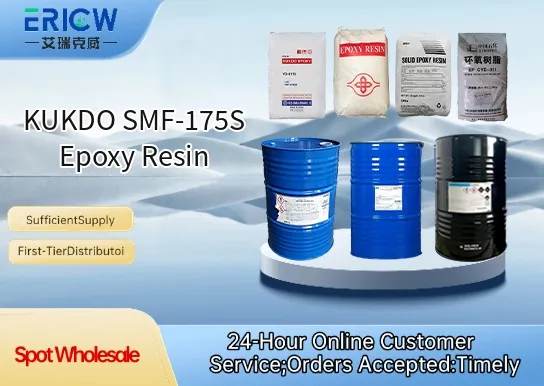
High reactivity with amine and anhydride hardeners for rapid gelation and short cycle times.
Excellent adhesion to metals, composites, and cured concrete substrates.
Low viscosity (12,000–14,000 cP at 25°C) enabling easy processing and air release in casting and impregnation.
Superior electrical insulation properties with high dielectric strength and volume resistivity.
Good thermal stability with glass transition temperature (Tg) up to 125°C after full cure.
Electrical encapsulation of transformers, reactors, and high-voltage insulators.
Structural bonding in wind turbine blade assembly and aerospace composite components.
Castings for industrial tooling, jigs, and precision molds requiring dimensional stability.
Impregnation of dry-type power transformers and resin-rich laminates.
Underfill and potting formulations for power electronics and EV battery modules.
| Chemical Type | Bisphenol-F based liquid epoxy resin |
| Product Form | Clear to pale yellow viscous liquid |
| Appearance | Homogeneous, transparent, free from gels or sediment |
| Epoxy Equivalent Weight (EEW) | 172–178 g/eq |
| Viscosity (25°C) | 12,000–14,000 cP |
| Chloride Content | ≤ 500 ppm |
| Softening Point | Not applicable (liquid at room temperature) |
| Storage Stability | ≥ 12 months at 20–25°C in sealed original container |
Q1: What is the primary functional role of SMF-175S in epoxy formulations?
A: SMF-175S is a solid, multifunctional epoxy resin designed primarily as a reactive diluent and viscosity modifier. It helps reduce formulation viscosity without volatile organic compounds (VOCs), while contributing additional epoxy functionality to enhance crosslink density and thermal stability in cured systems.
Q2: Is SMF-175S compatible with standard amine and anhydride curing agents?
A: Yes, SMF-175S exhibits broad compatibility with common epoxy hardeners, including aliphatic and aromatic amines as well as cyclic anhydrides. Its reactivity profile aligns well with conventional curing kinetics, though optimal stoichiometry and cure schedules should be confirmed through small-scale formulation testing.
Q3: How does SMF-175S compare to liquid reactive diluents in terms of handling and safety?
A: As a solid at room temperature, SMF-175S offers improved handling safety compared to low-molecular-weight liquid diluents — it eliminates inhalation risks associated with vapors and reduces skin contact hazards during weighing and mixing. It also avoids potential volatility-related inconsistencies in final film formation.
Q4: Can SMF-175S be used in high-performance coatings requiring chemical resistance?
A: Yes — due to its rigid molecular structure and ability to increase crosslink density, SMF-175S is frequently incorporated into high-solids and powder coating formulations targeting enhanced resistance to solvents, acids, and alkaline media. Performance outcomes depend on overall formulation design and cure conditions.
Contact With Us:
E-mail: wangxingqiang@ericwchem.com
Have a Questions? Call Us:
Add:
Building A1, Jiete Industrial Park, Huangpu District, Guangzhou City, Guangdong Province, China