English
 Español
 tiếng việt
 русский
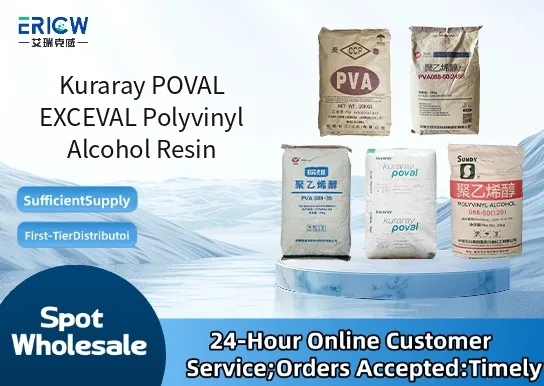
High water solubility with rapid dissolution even at low temperatures.
Exceptional film-forming capability yielding transparent, flexible, and strong films.
Outstanding adhesion to polar substrates including paper, metal, and cellulose-based materials.
Controlled hydrolysis degree enabling tailored balance between water resistance and biodegradability.
Low residual acetaldehyde content ensuring compliance with stringent food-contact and pharmaceutical regulations.
Water-soluble packaging films for agrochemicals, detergents, and industrial concentrates.
Binders in ceramic and metallurgical green body processing.
Dispersants and protective colloids in pigment and battery electrode slurries.
Reinforcing agents in paper surface sizing and coating formulations.
Matrix component in controlled-release pharmaceutical tablets and wound care hydrogels.
| Chemical Type | Polyvinyl alcohol (PVOH), fully hydrolyzed grade |
| Product Form | White granular or powder |
| Appearance | Free-flowing white granules or fine powder |
| Hydrolysis Degree | ≥ 98.5 mol% (typical) |
| Viscosity (4% aqueous solution, 20°C) | 20–35 mPa·s |
| pH (5% aqueous solution) | 5.0–7.0 |
| Volatile Matter (105°C, 2 hrs) | ≤ 5.0 wt% |
| Residual Acetate Content | ≤ 1.5 mol% |
Q1: What distinguishes EXCEVAL from standard polyvinyl alcohol (PVOH) resins?
A: EXCEVAL is a specialty PVOH resin engineered for enhanced barrier performance—particularly against oxygen and aromas—under low-humidity conditions. Unlike conventional PVOH grades, it offers improved film-forming consistency and superior compatibility with hydrophobic polymers in co-extruded or coated multilayer structures.
Q2: Is EXCEVAL suitable for food-contact packaging applications?
A: Yes, EXCEVAL is manufactured under stringent quality controls and complies with major global food-contact regulations for indirect use in multilayer packaging. Its application is typically limited to non-direct-contact layers unless specifically validated within an approved system.
Q3: How is EXCEVAL typically processed in industrial coating or extrusion lines?
A: EXCEVAL is commonly dissolved in warm deionized water to form stable aqueous solutions prior to application. It is widely used in roll-to-roll gravure or slot-die coating, as well as in co-extrusion with PE, PP, or EVOH—where it serves as a functional barrier layer. Thermal stability allows processing at typical film-line temperatures without significant degradation.
Q4: Does EXCEVAL require plasticizers or additives for film formation?
A: EXCEVAL films can be formed without plasticizers under controlled drying conditions; however, formulation adjustments—including optional humectants or crosslinkers—may be applied depending on end-use requirements such as flexibility, moisture resistance, or heat-seal performance.
Q5: How does humidity affect the barrier performance of EXCEVAL-based layers?
A: Like all PVOH derivatives, EXCEVAL’s oxygen barrier is highly effective at relative humidities below 60%, but declines progressively as ambient moisture increases. Optimal performance is achieved when integrated into laminated or metallized structures that limit moisture ingress to the PVOH layer.
Contact With Us:
E-mail: wangxingqiang@ericwchem.com
Have a Questions? Call Us:
Add:
Building A1, Jiete Industrial Park, Huangpu District, Guangzhou City, Guangdong Province, China