English
 Español
 tiếng việt
 русский
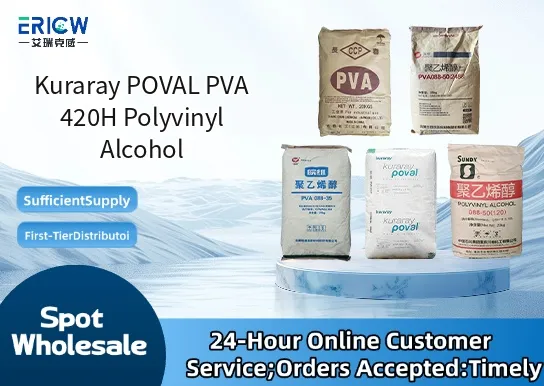
High degree of hydrolysis (≥98.5 mol%) for excellent water solubility and film strength.
Controlled viscosity grade (4% aqueous solution at 20°C: ~20–24 mPa·s) enabling precise rheology management in formulations.
Low residual acetate content (<1.5 mol%) ensuring superior chemical stability and reduced odor.
Excellent adhesion to polar substrates including paper, cellulose, metals, and ceramics.
Biodegradable and non-toxic profile compliant with FDA 21 CFR §177.2400 for indirect food contact applications.
Water-soluble packaging films for agrochemicals, detergents, and industrial concentrates.
Binder in ceramic green body formation and tape casting for electronic substrates.
Temporary protective coating for metal parts during electroplating or anodizing.
Thickener and film former in water-based textile printing pastes and pigment dispersions.
Dispersing aid and stabilizer in aqueous pigment and nanomaterial suspensions.
| Chemical Type | Polyvinyl alcohol (partially hydrolyzed polyvinyl acetate) |
| Product Form | White to off-white free-flowing powder |
| Appearance | Free-flowing granular or flake powder |
| Degree of Hydrolysis | ≥98.5 mol% |
| Viscosity (4% w/w, 20°C) | 20–24 mPa·s |
| Residual Acetate Content | <1.5 mol% |
| pH (4% aqueous solution) | 5.0–6.5 |
| Moisture Content | <5.0 wt% |
Q1: What is the primary functional role of POVAL PVA 420H in water-based formulations?
A: POVAL PVA 420H functions primarily as a film-forming binder and rheology modifier. Its balanced hydrolysis degree and molecular weight provide good aqueous solubility, cohesive strength, and adhesion to polar substrates—making it especially suitable for coatings, adhesives, and temporary protective films where controlled film integrity and removability are required.
Q2: How does PVA 420H differ from lower- or higher-hydrolysis-grade POVAL grades?
A: PVA 420H features a medium hydrolysis level (~88 mol%), offering a practical balance between water solubility and organic solvent resistance. Compared to fully hydrolyzed grades (e.g., 400 series with >98% hydrolysis), it dissolves more readily in cold water and exhibits greater flexibility in dried films. Versus partially hydrolyzed grades (e.g., 200 series), it delivers improved film strength and reduced tackiness while retaining adequate rewettability.
Q3: Is POVAL PVA 420H suitable for applications requiring thermal stability during processing?
A: Yes—PVA 420H demonstrates good thermal stability up to approximately 200°C under short-term exposure, supporting common drying and curing processes in coating and fiber-sizing operations. However, prolonged heating above 180°C may lead to progressive deacetylation and oxidative degradation, so process conditions should be optimized to minimize extended high-temperature residence time.
Q4: Can POVAL PVA 420H be blended with other water-soluble polymers or additives?
A: Yes—it is generally compatible with many water-soluble cellulose derivatives (e.g., HPMC, MC), acrylic thickeners, and certain anionic surfactants. Compatibility should be verified experimentally for each specific formulation, particularly when incorporating crosslinkers, multivalent ions, or strongly acidic/basic components that may affect colloidal stability or film formation.
Contact With Us:
E-mail: wangxingqiang@ericwchem.com
Have a Questions? Call Us:
Add:
Building A1, Jiete Industrial Park, Huangpu District, Guangzhou City, Guangdong Province, China