English
 Español
 tiếng việt
 русский
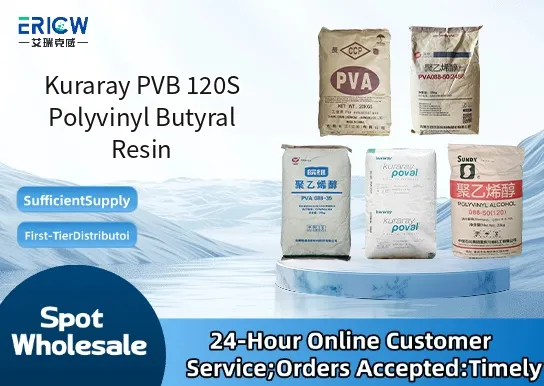
Optimized viscosity for high-solids, low-VOC coating formulations.
Excellent adhesion to glass, metals, and primed plastics.
Superior clarity and UV stability for long-term optical performance.
Consistent batch-to-batch quality ensured by Kuraray’s proprietary polymerization control.
Good compatibility with common plasticizers (e.g., triethylene glycol di-2-ethylhexanoate) and crosslinkers.
Laminated safety glass interlayers for automotive windshields and architectural glazing.
High-performance protective coatings for metal substrates in transportation and industrial equipment.
Binders in ceramic tile adhesives requiring enhanced flexibility and moisture resistance.
Base resin for specialty inks and overprint varnishes demanding gloss retention and substrate bonding.
Functional component in encapsulants for photovoltaic modules requiring optical transparency and dielectric integrity.
| Chemical Type | Polyvinyl butyral (PVB) copolymer |
| Product Form | Free-flowing white to off-white granular powder |
| Appearance | Uniform granules, free of visible impurities |
| Butyral Content | 65–70 wt% (typical) |
| Hydroxyl Content | 18–22 wt% (typical) |
| Residual Vinyl Alcohol | <1.0 wt% |
| Gel Content | <0.5 wt% |
| Primary Applications | Laminated glass interlayers, protective coatings, adhesive binders |
Q1: What is the primary functional role of Kuraray PVB 120S in adhesive and coating formulations?
A: Kuraray PVB 120S serves primarily as a film-forming binder and adhesion promoter, enhancing cohesive strength, flexibility, and interfacial bonding—especially on polar substrates such as glass, metals, and treated plastics.
Q2: How does PVB 120S differ from other PVB resins in terms of solubility and processing behavior?
A: PVB 120S exhibits balanced solubility in common organic solvent blends (e.g., alcohols, ketones, esters), enabling stable solutions at moderate solids content. Its viscosity profile supports easy handling in both solvent-based and hot-melt compatible processes without excessive gelation or stringing.
Q3: Is PVB 120S suitable for use in safety glass interlayer applications?
A: No—PVB 120S is formulated for industrial coatings, adhesives, and specialty inks, not structural laminated glass interlayers. It lacks the specific plasticizer compatibility, optical clarity, and long-term durability requirements of architectural or automotive safety glass interlayers.
Q4: Can PVB 120S be blended with other resin systems, such as acrylics or polyurethanes?
A: Yes—PVB 120S demonstrates good compatibility with many thermoplastic resins including acrylics, nitrocellulose, and certain alkyds. Compatibility testing under actual formulation conditions is recommended to confirm stability, film integrity, and performance synergy.
Q5: What are typical storage and handling recommendations for this resin?
A: Store in original sealed containers in a cool, dry, well-ventilated area away from direct sunlight and heat sources. Avoid prolonged exposure to high humidity, as PVB resins may absorb moisture and affect solution clarity or viscosity development.
Contact With Us:
E-mail: wangxingqiang@ericwchem.com
Have a Questions? Call Us:
Add:
Building A1, Jiete Industrial Park, Huangpu District, Guangzhou City, Guangdong Province, China