English
 Español
 tiếng việt
 русский
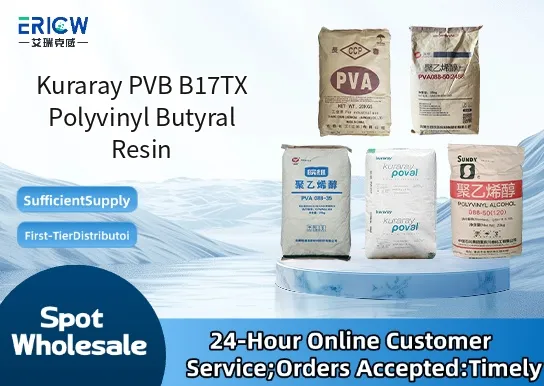
Optimized viscosity profile for high-solids, low-VOC coating formulations.
Excellent adhesion to glass, metal, and various plastic substrates.
Superior thermal stability during lamination and drying processes.
Consistent batch-to-batch rheological performance for reliable process control.
High purity with low residual solvent and volatile content.
Safety interlayer film for automotive laminated windshields.
Architectural laminated glass interlayers in façades and skylights.
Functional coatings for anti-spall and blast-resistant glazing systems.
Adhesive layers in photovoltaic module encapsulation (EVA-compatible systems).
| Chemical Type | Polyvinyl butyral (PVB) copolymer |
| Product Form | Free-flowing white to off-white granules |
| Appearance | Uniform granular solid, free of visible impurities |
| Butyral Content | 68–70 wt% (typical) |
| Hydroxyl Content | 18–20 wt% (typical) |
| Residual Vinyl Alcohol | < 5 wt% |
| Gel Content | < 0.5% (in methanol) |
| Primary Applications | Laminated safety glass interlayers, functional coatings |
Q1: What is the primary functional role of Kuraray PVB B17TX in adhesive and coating formulations?
A: Kuraray PVB B17TX serves primarily as a high-performance binder and adhesion promoter, enhancing interfacial bonding between dissimilar substrates—especially in laminated safety glass interlayers, decorative laminates, and specialty industrial coatings. Its balanced butyral content provides excellent clarity, flexibility, and compatibility with plasticizers and other resin systems.
Q2: How does B17TX differ from standard PVB resins used in architectural laminated glass?
A: B17TX is specifically engineered for non-structural, high-clarity applications requiring superior solution stability and film-forming characteristics—such as ink-receptive layers, protective overcoats, and precision adhesive films. Unlike general-purpose PVB grades optimized for bulk interlayer production, B17TX offers enhanced solubility in common organic solvent blends and improved rheological control in low-viscosity formulations.
Q3: Is B17TX suitable for use in food-contact or pharmaceutical packaging applications?
A: While B17TX is manufactured under strict quality controls and exhibits low volatility and excellent hydrolytic stability, it is not pre-qualified for direct food-contact or pharmaceutical use without formulation-specific regulatory review. Customers intending such applications should conduct full migration and extractables testing aligned with their target market requirements and consult Kuraray technical support for guidance on compliant processing conditions.
Q4: What solvent systems are recommended for optimal dissolution of B17TX?
A: B17TX demonstrates good solubility in mixtures containing alcohols (e.g., ethanol, isopropanol), ketones (e.g., methyl ethyl ketone, acetone), and esters (e.g., ethyl acetate). For consistent performance, solvent blends are typically preferred over single-solvent systems to balance evaporation rate, solution viscosity, and film uniformity.
Contact With Us:
E-mail: wangxingqiang@ericwchem.com
Have a Questions? Call Us:
Add:
Building A1, Jiete Industrial Park, Huangpu District, Guangzhou City, Guangdong Province, China