English
 Español
 tiếng việt
 русский
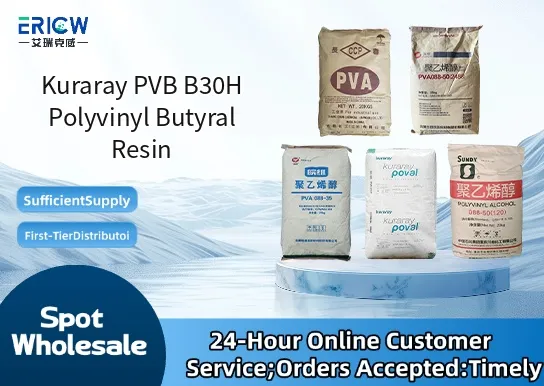
High adhesion strength to glass and polycarbonate substrates, ensuring reliable interlayer bonding in laminated safety glazing.
Excellent optical clarity and low haze, supporting high-transparency requirements for architectural and automotive glazing.
Superior impact resistance and energy absorption performance under dynamic loading conditions.
Good processability in standard lamination lines, including compatibility with autoclave and vacuum bag methods.
Consistent thermal stability and low volatility during pre-press and final lamination cycles.
Automotive laminated windshields and side windows for passenger vehicles and commercial fleets.
Architectural safety glazing in façades, skylights, and overhead glazing systems.
Security and blast-resistant laminates for critical infrastructure and government facilities.
Photovoltaic module encapsulation layers requiring long-term UV stability and moisture barrier performance.
| Chemical Type | Polyvinyl butyral (PVB) resin |
| Product Form | Free-flowing white granules |
| Appearance | Off-white to light yellow granular solid |
| Primary Applications | Laminated safety glass interlayer |
| Key Features | High tack, balanced melt viscosity, excellent interfacial adhesion |
| Benefits | Improved lamination yield, reduced delamination risk, enhanced optical quality |
| Storage Conditions | Store in cool, dry place; protect from moisture and direct sunlight |
Q1: What is the primary function of Kuraray PVB B30H in adhesive and coating formulations?
A: Kuraray PVB B30H serves primarily as a high-performance binder and adhesion promoter, enhancing cohesion, flexibility, and interfacial bonding—especially between polar substrates such as glass, metals, and treated plastics. Its balanced butyral content provides excellent film-forming ability and compatibility with diverse resin systems.
Q2: How does PVB B30H differ from other grades in the Kuraray PVB series, such as B72 or B74?
A: PVB B30H features a lower molecular weight and higher hydroxyl content compared to higher-viscosity grades like B72 or B74, resulting in improved solubility in common organic solvents (e.g., ethanol, ethyl acetate, and toluene blends) and faster drying characteristics—making it especially suitable for solvent-based laminating adhesives and protective coatings requiring rapid processing.
Q3: Is PVB B30H compatible with epoxy, acrylic, or polyurethane resins?
A: Yes, PVB B30H demonstrates broad compatibility with epoxy, acrylic, and aliphatic polyurethane systems due to its polar functional groups and moderate polarity. It is frequently used as a toughening modifier or compatibilizer to improve impact resistance and reduce brittleness without compromising clarity or long-term stability.
Q4: What solvent systems are recommended for dissolving PVB B30H efficiently?
A: PVB B30H dissolves readily in alcohol–ester–aromatic solvent blends—for example, ethanol/ethyl acetate/toluene mixtures. It exhibits limited solubility in pure aliphatic hydrocarbons or water, and dissolution efficiency improves with mild heating (< 50 °C) and adequate agitation. Solvent selection should consider VOC regulations and downstream application requirements.
Contact With Us:
E-mail: wangxingqiang@ericwchem.com
Have a Questions? Call Us:
Add:
Building A1, Jiete Industrial Park, Huangpu District, Guangzhou City, Guangdong Province, China