English
 Español
 tiếng việt
 русский
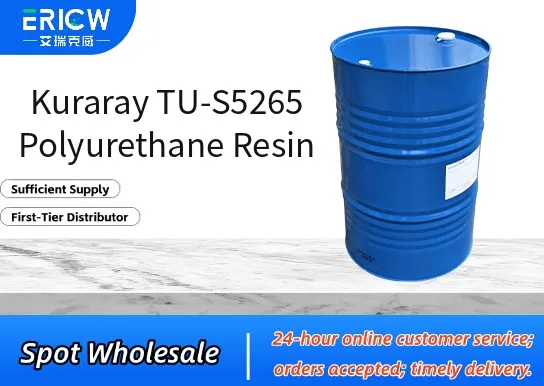
Highly transparent and optically clear film-forming capability for premium surface aesthetics.
Excellent abrasion and scratch resistance, enhancing long-term durability in demanding environments.
Good flexibility and low-temperature toughness without compromising hardness or adhesion.
Compatible with common solvent-based coating systems and suitable for ambient or low-bake curing.
Low yellowing tendency under UV exposure, supporting stable color retention over time.
Protective topcoats for automotive interior trim and instrument panels.
Decorative and functional coatings for consumer electronics housings.
High-gloss finishing layers for rigid plastic substrates including ABS and PC.
Clear protective films for signage, display panels, and architectural plastic components.
Overprint varnishes for high-end printed packaging requiring scuff resistance and clarity.
| Chemical Type | Aliphatic polyurethane resin (solvent-based) |
| Product Form | Liquid solution |
| Appearance | Colorless to pale yellow, transparent liquid |
| Solvent System | Toluene / xylene / ester blend (proprietary formulation) |
| Non-Volatile Content | Approx. 45–50 wt% (as supplied) |
| Viscosity (25°C) | Approx. 800–1,200 mPa·s (Brookfield, spindle #3, 20 rpm) |
| Acid Value | < 5 mg KOH/g |
| Primary Applications | Clear topcoats, protective finishes, high-clarity decorative coatings |
Q1: What is the primary function of TU-S5265 in coating and adhesive formulations?
A: TU-S5265 is a reactive polyurethane resin designed to enhance crosslink density, improve mechanical durability, and increase chemical resistance in solvent-based and high-solids coating and adhesive systems. It functions as a co-resin or modifier, contributing flexibility, toughness, and adhesion promotion without compromising film clarity.
Q2: Is TU-S5265 compatible with common industrial resins such as acrylics, alkyds, and epoxies?
A: Yes, TU-S5265 demonstrates broad compatibility with many thermosetting and thermoplastic resins used in industrial coatings—including acrylics, alkyds, and epoxy-modified systems—enabling hybrid formulations with balanced cure performance and physical properties. Compatibility testing under actual processing conditions is recommended prior to full-scale implementation.
Q3: How should TU-S5265 be handled during storage and processing?
A: TU-S5265 should be stored in tightly sealed containers under dry, cool conditions, away from moisture and strong oxidizing agents. During processing, standard handling precautions for polyisocyanate-containing materials apply—use in well-ventilated areas and wear appropriate PPE, including nitrile gloves and eye protection, to minimize exposure risk.
Q4: Can TU-S5265 be used in low-VOC or high-solids applications?
A: Yes, TU-S5265 is formulated for use in medium-to-high solids systems and supports VOC reduction strategies when blended with low-solvent or reactive diluent systems. Its reactivity profile allows for efficient curing at moderate temperatures, helping maintain formulation efficiency without excessive solvent demand.
Q5: What types of substrates does TU-S5265 typically adhere well to?
A: TU-S5265 contributes strong adhesion to a wide range of substrates, including metals (e.g., aluminum, steel), plastics (e.g., ABS, polycarbonate), and treated wood surfaces. Performance may vary depending on surface preparation and primer usage, so substrate-specific evaluation is advised for critical applications.
Contact With Us:
E-mail: wangxingqiang@ericwchem.com
Have a Questions? Call Us:
Add:
Building A1, Jiete Industrial Park, Huangpu District, Guangzhou City, Guangdong Province, China