English
 Español
 tiếng việt
 русский
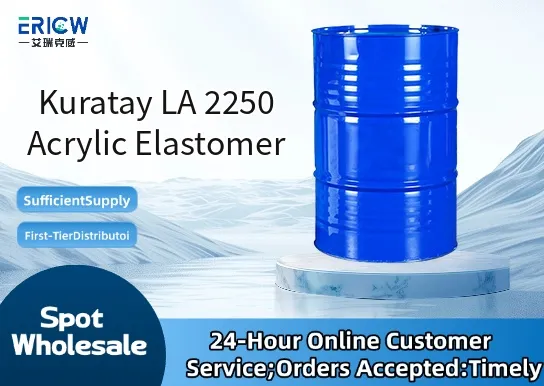
Excellent UV and weather resistance for long-term outdoor performance.
Outstanding flexibility and elasticity at low temperatures down to –40 °C.
Good adhesion to diverse substrates including metals, plastics, and primed concrete.
Low VOC formulation compliant with stringent environmental regulations.
High elongation (>300%) with excellent recovery and crack-bridging capability.
High-performance elastomeric roof coatings for commercial and industrial buildings.
Waterproofing membranes for balconies, terraces, and green roofs.
Joint sealants and expansion joint fillers in infrastructure projects.
Flexible protective topcoats for concrete repair systems and façade protection.
Base polymer for advanced acrylic-based waterproofing mortars and renders.
| Chemical Type | Acrylic copolymer elastomer dispersion |
| Product Form | Aqueous polymer dispersion (non-ionic) |
| Appearance | White to slightly bluish opaque liquid |
| Solids Content | Approx. 52–54 wt% |
| pH (1% aqueous solution) | 7.5–8.5 |
| Minimum Film Formation Temperature (MFFT) | ≈ –5 °C |
| Viscosity (Brookfield, RVT, #2 spindle, 20 rpm, 25 °C) | 150–400 mPa·s |
| Storage Stability | ≥6 months at 5–30 °C in sealed container |
Q1: What is the primary function of Kuratay LA 2250 in polymer formulations?
A: Kuratay LA 2250 functions as a reactive acrylic elastomer modifier, primarily used to enhance impact resistance, flexibility, and low-temperature toughness in rigid thermoplastic matrices—especially in PVC, ABS, and polycarbonate blends—without significantly compromising tensile strength or processability.
Q2: Is Kuratay LA 2250 compatible with heat-sensitive polymers?
A: Yes, it exhibits good thermal stability during standard melt processing (e.g., extrusion, injection molding) and is formulated to minimize degradation risk in heat-sensitive systems. Its reactive acrylate groups enable covalent bonding during processing, supporting stable morphology development without requiring excessively high temperatures.
Q3: How is Kuratay LA 2250 typically incorporated into a formulation?
A: It is generally introduced during the compounding stage—either pre-blended with base resin or added directly to the extruder feed throat. Dosage depends on formulation requirements but typically ranges from 0.1% to 2% by weight, with optimal performance often observed at moderate loadings that balance toughness enhancement and rheological control.
Q4: Does Kuratay LA 2250 require special handling or storage conditions?
A: Store in original sealed containers in a cool, dry place away from direct sunlight and strong oxidizing agents. While not classified as hazardous under standard transport regulations, it should be handled using appropriate personal protective equipment (e.g., gloves, safety glasses) to avoid prolonged skin contact or inhalation of dust during manual handling.
Contact With Us:
E-mail: wangxingqiang@ericwchem.com
Have a Questions? Call Us:
Add:
Building A1, Jiete Industrial Park, Huangpu District, Guangzhou City, Guangdong Province, China