English
 Español
 tiếng việt
 русский
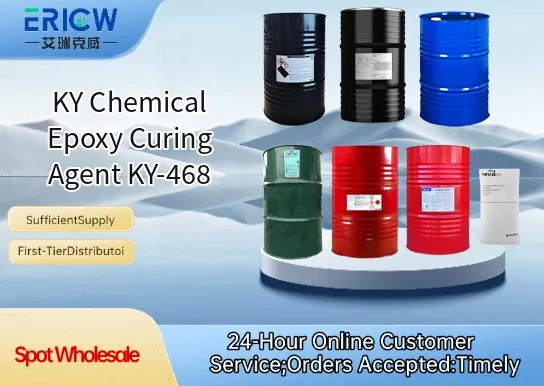
Low-viscosity liquid formulation for excellent mixing and degassing with epoxy resins.
Room-temperature curing capability with balanced pot life and rapid strength development.
Superior chemical resistance to alkalis, solvents, and mild acids after full cure.
Low volatility and low odor—designed for improved workplace safety and compliance with VOC guidelines.
Enhanced adhesion to metals, concrete, and composite substrates without primer requirement.
High-performance structural adhesives for automotive and aerospace assembly.
Protective coatings and linings for industrial flooring and tank interiors.
Electrical encapsulation and potting compounds for power electronics and transformers.
Repair mortars and grouts for civil engineering infrastructure rehabilitation.
Composite matrix systems in wind blade manufacturing and marine laminates.
| Chemical Type | Aliphatic polyamine modified adduct |
| Product Form | Liquid |
| Appearance | Clear to pale yellow, homogeneous liquid |
| Density (25°C) | 0.94–0.97 g/cm³ |
| Viscosity (25°C) | 180–250 mPa·s |
| Amine Value | 380–420 mg KOH/g |
| Reactivity (with DGEBA resin) | Full cure at 25°C in 7 days; >90% Tg reached in 48 h |
| Storage Stability | 12 months unopened at 5–30°C in original container |
Q1: What is the primary chemical class of KY-468?
A: KY-468 is a modified aliphatic amine-based epoxy curing agent, engineered to balance reactivity, pot life, and cured film performance in ambient- and low-temperature cure applications.
Q2: Can KY-468 be used for food-contact or potable water applications?
A: KY-468 is not pre-qualified for direct food-contact or potable water systems. Formulators must conduct full regulatory evaluation—including extractables testing and compliance verification—based on final cured resin composition and intended use conditions.
Q3: How does KY-468 compare to conventional DETA or DEEDA in terms of handling safety?
A: KY-468 exhibits significantly reduced volatility and skin sensitization potential compared to unmodified short-chain aliphatic amines. It has lower vapor pressure and milder dermal irritation profile, supporting safer industrial handling—though appropriate PPE and ventilation remain essential.
Q4: What is the typical mixing ratio range when formulating with standard DGEBA resins?
A: The required dosage depends on formulation requirements and target properties, but KY-468 is generally used at low concentrations—typically ranging from 0.1% to 2% by weight relative to epoxy resin solids—and is often blended with co-curing agents for optimized performance.
Q5: Does KY-468 require post-cure to achieve full mechanical properties?
A: KY-468 enables robust ambient-cure performance, and full crosslink density is typically achieved without mandatory post-cure. However, elevated temperature conditioning (e.g., 60–80 °C for several hours) may further enhance chemical resistance and glass transition temperature in demanding applications.
Contact With Us:
E-mail: wangxingqiang@ericwchem.com
Have a Questions? Call Us:
Add:
Building A1, Jiete Industrial Park, Huangpu District, Guangzhou City, Guangdong Province, China