English
 Español
 tiếng việt
 русский
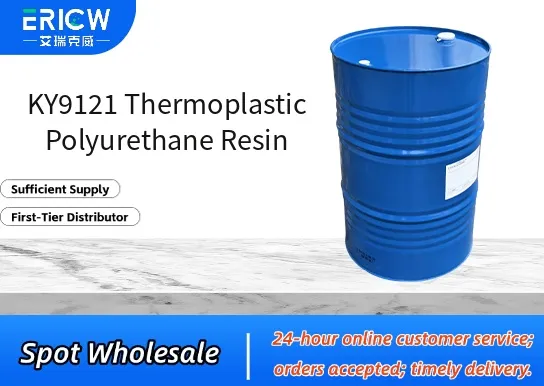
Excellent abrasion resistance and mechanical toughness for demanding dynamic applications.
Outstanding elasticity and recovery performance over a wide temperature range (−40 °C to 80 °C).
Good processability via extrusion, injection molding, and blow molding without thermal degradation.
Enhanced oil and grease resistance compared to standard TPU grades.
Compliant with RoHS and REACH regulations; free of phthalates and heavy metals.
High-performance automotive interior trim and instrument panel skins.
Flexible hoses and tubing for pneumatic and hydraulic systems.
Durable protective coatings for industrial rollers and conveyor belts.
Soft-touch grips and ergonomic components in power tools and medical devices.
Wear-resistant soles and midsoles in premium athletic footwear.
| Chemical Type | Aliphatic polyester-based thermoplastic polyurethane |
| Product Form | Pellets (free-flowing, uniform size) |
| Appearance | Translucent to off-white granules |
| Hardness (Shore A) | 90 ± 2 |
| Melt Flow Index (230 °C / 2.16 kg) | 15–20 g/10 min |
| Density | 1.18–1.20 g/cm³ |
| Moisture Content (as received) | ≤ 0.05 wt% |
| Primary Applications | Extruded profiles, molded elastomeric parts, coated fabrics |
Q1: What are the primary processing methods suitable for KY9121?
A: KY9121 is designed for melt-processing techniques including extrusion, injection molding, and calendering. Its thermoplastic nature enables repeated melting and solidification without chemical crosslinking, supporting efficient recycling and reprocessing in standard TPU equipment.
Q2: How does KY9121 perform under elevated temperature or prolonged UV exposure?
A: KY9121 exhibits good thermal stability during typical processing and end-use conditions. While it is not inherently UV-stabilized, long-term outdoor applications benefit from the addition of appropriate UV absorbers or HALS-based stabilizers, as recommended for most aromatic TPU systems.
Q3: Is KY9121 compatible with common engineering thermoplastics like ABS, PC, or polyesters?
A: KY9121 shows favorable compatibility with several polar engineering resins—particularly ABS and certain polyester blends—enabling use in alloy formulations. Compatibility should be verified through melt blending trials and morphology assessment, as phase behavior depends on specific grade selection and processing parameters.
Q4: Can KY9121 be used in applications requiring skin contact or food-contact proximity?
A: KY9121 is formulated without intentionally added heavy metals or regulated phthalates. However, final regulatory compliance—including for skin-safe or food-contact applications—depends on the full formulation, processing history, and applicable regional requirements. Users must conduct appropriate testing and validation for their specific application and jurisdiction.
Contact With Us:
E-mail: wangxingqiang@ericwchem.com
Have a Questions? Call Us:
Add:
Building A1, Jiete Industrial Park, Huangpu District, Guangzhou City, Guangdong Province, China