English
 Español
 tiếng việt
 русский
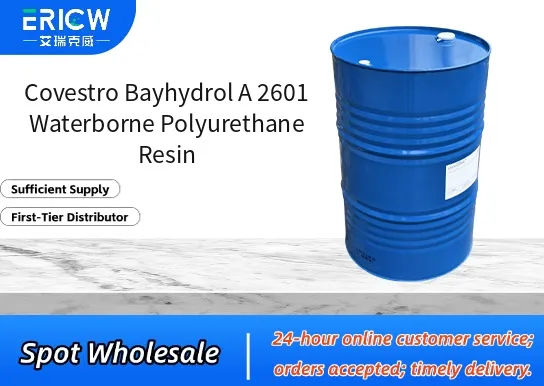
High solids content for improved film build and reduced drying time.
Excellent mechanical properties including scratch resistance and flexibility.
Low VOC formulation compliant with stringent environmental regulations.
Good compatibility with acrylic and polyester co-resins for hybrid systems.
Stable dispersion with broad pH tolerance and excellent storage stability.
High-performance waterborne wood coatings for furniture and flooring.
Industrial maintenance coatings for metal substrates.
Automotive refinish clearcoats requiring high gloss and durability.
Plastic coatings for interior automotive parts and consumer electronics.
General-purpose protective topcoats for architectural and DIY applications.
| Chemical Type | Aliphatic polyurethane dispersion |
| Product Form | Waterborne liquid dispersion |
| Appearance | Clear to slightly hazy, light yellow liquid |
| Solids Content (wt. %) | 35–37% |
| pH Value | 7.5–8.5 |
| Viscosity (mPa·s, 23 °C, Brookfield RVT, spindle #3, 20 rpm) | 150–400 |
| Density (g/cm³, 20 °C) | 1.02–1.05 |
| Minimum Film Formation Temperature (MFFT) | ≈ 15 °C |
Q1: What is the primary application area for Bayhydrol A 2601?
A: Bayhydrol A 2601 is primarily used as a hydrophilic polyurethane dispersion in high-performance waterborne coatings, especially where excellent film formation, flexibility, and chemical resistance are required—such as in industrial maintenance, plastic coatings, and specialty protective finishes.
Q2: Is Bayhydrol A 2601 compatible with other waterborne resins or crosslinkers?
A: Yes, Bayhydrol A 2601 exhibits good compatibility with common waterborne acrylics, polyesters, and melamine formaldehyde resins. It also responds well to standard blocked isocyanate crosslinkers, enabling formulation of two-component (2K) systems with enhanced durability and crosslink density.
Q3: How should Bayhydrol A 2601 be stored and handled to maintain stability?
A: Store in tightly sealed original containers at temperatures between 5 °C and 30 °C, avoiding freezing and prolonged exposure to direct sunlight. Prior to use, ensure thorough but gentle mixing to rehomogenize any minor sedimentation—no high-shear dispersion is needed.
Q4: Does Bayhydrol A 2601 require neutralization before incorporation into formulations?
A: No, Bayhydrol A 2601 is supplied as a ready-to-use anionic dispersion and does not require pH adjustment or neutralization for typical coating applications. However, final formulation pH should be maintained within the recommended range (generally 7.5–9.0) to ensure colloidal stability.
Contact With Us:
E-mail: wangxingqiang@ericwchem.com
Have a Questions? Call Us:
Add:
Building A1, Jiete Industrial Park, Huangpu District, Guangzhou City, Guangdong Province, China