English
 Español
 tiếng việt
 русский
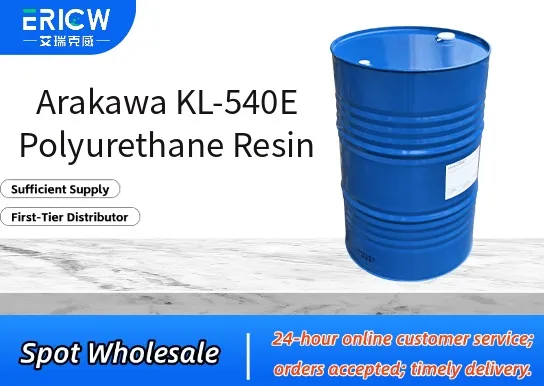
Highly reactive aliphatic polyisocyanate-based prepolymer offering excellent weather resistance and UV stability.
Low-viscosity liquid formulation enabling easy handling, precise metering, and compatibility with standard PU processing equipment.
Exceptional adhesion to diverse substrates including metals, plastics, and composites without requiring primers.
Fast room-temperature cure profile with good pot life balance for high-throughput industrial coating and adhesive applications.
Low VOC content compliant with stringent environmental regulations for industrial coatings and sealants.
High-performance protective topcoats for automotive OEM and refinish systems.
Durable clearcoats for architectural metal cladding and façade panels.
Structural adhesives for bonding composite components in transportation and wind energy sectors.
Flexible elastomeric sealants for expansion joints in civil infrastructure projects.
UV-resistant overprint varnishes for premium flexible packaging laminates.
| Chemical Type | Aliphatic polyisocyanate-based polyurethane prepolymer |
| Product Form | Liquid |
| Appearance | Clear to pale yellow transparent liquid |
| Viscosity (25°C) | 1,200–1,800 mPa·s |
| NCO Content | 4.8–5.2 wt% |
| Density (25°C) | 1.12–1.16 g/cm³ |
| Primary Applications | Coatings, adhesives, sealants, and elastomers (CASE) |
| Storage Stability | ≥12 months at 5–30°C in sealed containers under dry nitrogen |
Q1: What is the primary function of KL-540E in polyurethane systems?
A: KL-540E is a reactive polyurethane resin designed to serve as a chain extender and crosslinking agent, enhancing mechanical strength, abrasion resistance, and thermal stability in thermosetting PU coatings, adhesives, and elastomers.
Q2: Is KL-540E compatible with aromatic and aliphatic isocyanates?
A: Yes, KL-540E demonstrates broad compatibility with both aromatic (e.g., MDI, TDI derivatives) and aliphatic (e.g., HDI, IPDI-based prepolymers) isocyanate systems, supporting formulation flexibility for performance-critical applications requiring UV stability or chemical resistance.
Q3: How should KL-540E be handled and stored to maintain stability?
A: Store in tightly sealed containers under dry, cool conditions (below 30 °C), protected from moisture and direct sunlight. Avoid prolonged exposure to ambient humidity during handling, as it may lead to premature reaction or viscosity increase due to moisture sensitivity.
Q4: Can KL-540E be used in solvent-free or high-solids PU formulations?
A: Yes — KL-540E is well-suited for low-VOC and solvent-free systems due to its relatively low volatility and ability to contribute reactivity without requiring high-temperature curing, supporting environmentally compliant manufacturing processes.
Q5: What is the typical recommended dosage range for KL-540E in standard PU formulations?
A: Dosage depends on the target crosslink density and final application requirements, but KL-540E is generally incorporated at levels ranging from 0.1% to 2% by weight relative to the total resin solids, adjusted based on NCO:OH ratio optimization and cure profile.
Contact With Us:
E-mail: wangxingqiang@ericwchem.com
Have a Questions? Call Us:
Add:
Building A1, Jiete Industrial Park, Huangpu District, Guangzhou City, Guangdong Province, China