English
 Español
 tiếng việt
 русский
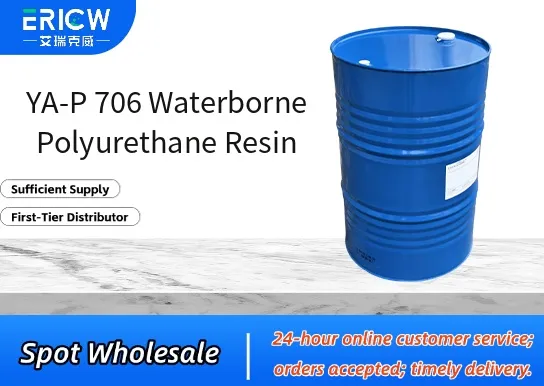
Low-VOC, environmentally compliant formulation meeting global regulatory standards for waterborne coatings.
Excellent film-forming capability with high gloss retention and superior clarity after drying.
Outstanding abrasion resistance and flexibility, enabling durable performance on flexible substrates.
Good compatibility with acrylic emulsions and crosslinkers for hybrid system formulation.
Stable viscosity profile across storage temperatures (5–40 °C) with minimal shear-thinning behavior.
Waterborne leather finishing topcoats for footwear and upholstery.
High-performance clear coats for wood furniture and cabinetry.
Flexible film-forming binder in textile coating and laminating applications.
Base resin for eco-friendly automotive interior trim coatings.
Component in sustainable packaging barrier coatings for paperboard.
| Chemical Type | Anionic aliphatic polyurethane dispersion |
| Product Form | Opaque white liquid |
| Appearance | Homogeneous milky dispersion, free of sediment or gel particles |
| Solids Content | 38 ± 1 wt% |
| pH Value | 7.8 – 8.5 |
| Viscosity (25 °C, Brookfield RVT, #2 spindle, 20 rpm) | 150 – 300 mPa·s |
| Particle Size (D50) | 80 – 120 nm |
| Minimum Film Formation Temperature (MFFT) | 12 °C |
Q1: What are the key advantages of YA-P 706 compared to solvent-based polyurethane resins?
A: YA-P 706 offers significantly reduced VOC content, improved workplace safety, and simplified handling due to its waterborne nature. It provides good film formation at ambient temperatures, excellent flexibility, and strong adhesion to various substrates—including plastics, metals, and coated papers—without requiring specialized ventilation or explosion-proof equipment.
Q2: Can YA-P 706 be used in direct food-contact applications?
A: YA-P 706 is not pre-certified for direct food contact. Its suitability for such applications depends on full formulation evaluation, including migration testing and compliance with relevant regional regulatory frameworks. Customers must conduct comprehensive end-product assessment and obtain necessary approvals before use in food packaging or processing environments.
Q3: How should YA-P 706 be stored and handled to maintain stability?
A: Store in tightly sealed containers at temperatures between 5 °C and 35 °C, away from freezing conditions and prolonged exposure to direct sunlight. Avoid contamination with incompatible materials (e.g., strong acids, oxidizers, or certain metal salts). Stir gently before use if phase separation occurs during extended storage.
Q4: Is YA-P 706 compatible with common co-binders or additives used in waterborne coatings?
A: Yes—YA-P 706 generally shows good compatibility with acrylic emulsions, cellulose derivatives, defoamers, wetting agents, and rheology modifiers commonly used in industrial waterborne systems. However, compatibility should always be verified experimentally in the final formulation, especially when incorporating high-ionic-strength additives or pH-sensitive components.
Contact With Us:
E-mail: wangxingqiang@ericwchem.com
Have a Questions? Call Us:
Add:
Building A1, Jiete Industrial Park, Huangpu District, Guangzhou City, Guangdong Province, China