English
 Español
 tiếng việt
 русский
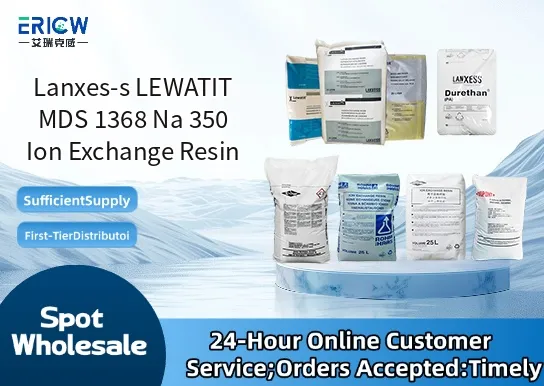
Highly uniform spherical beads ensuring consistent hydraulic performance and low pressure drop.
Optimized for high-capacity sodium-form cation exchange with excellent regeneration efficiency.
Robust macroporous polystyrene-divinylbenzene matrix providing superior chemical and osmotic stability.
Low fines content and high mechanical strength, minimizing attrition during repeated service/regeneration cycles.
Complies with global food-contact and potable water standards (e.g., NSF/ANSI Standard 61).
Softening of municipal and industrial feedwater for boilers and cooling towers.
Pretreatment in reverse osmosis (RO) systems to prevent scale formation on membranes.
Dealkalization in combination with anion resins for low-alkalinity boiler feedwater.
Food & beverage processing where consistent sodium-form exchange and regulatory compliance are critical.
Pharmaceutical-grade water purification requiring low extractables and high purity output.
| Chemical Type | Strong acid cation exchange resin (sodium form) |
| Product Form | Moist, spherical beads |
| Appearance | Opaque beige to light brown beads |
| Matrix Structure | Macroporous polystyrene-divinylbenzene copolymer |
| Functional Group | Sulfonic acid (–SO₃H) |
| Ion Form | Na⁺ (sodium form) |
| Uniformity Coefficient | ≤ 1.6 |
| Moisture Content | 45 – 50 % (w/w) |
Q1: What is the primary functional form and intended use of LEWATIT MDS 1368 Na 350?
A: LEWATIT MDS 1368 Na 350 is supplied in the sodium form and is a macroporous strong acid cation exchange resin designed for selective removal of multivalent cations—particularly calcium and magnesium—from aqueous process streams, including those with high organic load or variable pH.
Q2: How does the macroporous structure benefit performance in challenging feed waters?
A: The macroporous matrix provides enhanced physical stability and resistance to fouling, allowing consistent ion exchange capacity and regeneration efficiency even in solutions containing suspended solids, natural organic matter, or oxidizing agents that may compromise gel-type resins.
Q3: Is this resin suitable for food-grade or pharmaceutical water polishing applications?
A: LEWATIT MDS 1368 Na 350 is manufactured under quality systems aligned with industrial water treatment requirements; however, suitability for direct contact with food or pharmaceutical products depends on final validation by the end user—including system sanitization protocols, leachables testing, and compliance with applicable regional regulatory expectations.
Q4: What are typical regeneration conditions for this resin?
A: Regeneration is typically achieved using sodium chloride solution at concentrations between 8% and 10%, with flow rates and contact times adjusted based on service cycle length and influent water quality. Complete regeneration generally requires lower salt dosage per unit volume compared to conventional gel resins due to favorable kinetics and accessibility of exchange sites.
Q5: Can this resin be used in mixed-bed configurations for ultrapure water production?
A: While LEWATIT MDS 1368 Na 350 is optimized as a standalone cation exchanger in softening and decationization applications, it is not recommended for standard mixed-bed polishing due to differences in density, particle size distribution, and backwash behavior relative to common anion exchange resins—separate cation/anion beds are preferred for reliable long-term operation.
Contact With Us:
E-mail: wangxingqiang@ericwchem.com
Have a Questions? Call Us:
Add:
Building A1, Jiete Industrial Park, Huangpu District, Guangzhou City, Guangdong Province, China