English
 Español
 tiếng việt
 русский
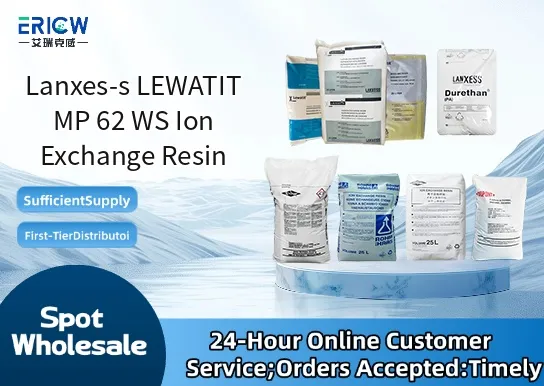
Highly uniform spherical beads ensuring consistent hydraulic performance and low pressure drop.
Stable macroporous polystyrene-divinylbenzene matrix with excellent chemical and osmotic shock resistance.
Optimized for weak acid cation exchange with high selectivity for divalent cations (e.g., Ca²⁺, Mg²⁺) in softening applications.
Low sodium leakage and high regeneration efficiency using mild acid regenerants such as sulfuric or hydrochloric acid.
Designed for use in both downflow and upflow service cycles, supporting flexible system configuration.
Industrial water softening for boiler feedwater and process water pretreatment.
Decarbonation and partial demineralization in hybrid ion exchange and membrane systems.
Removal of hardness ions from food & beverage production water and pharmaceutical process streams.
Pre-treatment for reverse osmosis (RO) and electrodeionization (EDI) systems to prevent scaling.
Recovery and recycling of metal-containing rinse waters in surface finishing and electroplating operations.
| Chemical Type | Weakly acidic cation exchange resin (carboxylic functional group) |
| Product Form | Moist, spherical beads |
| Appearance | Opaque, off-white to light yellow beads |
| Functional Group | –CH₂COOH (carboxylic acid) |
| Matrix Structure | Macroporous polystyrene-divinylbenzene copolymer |
| Ion Form | H⁺ (hydrogen form, standard packaging) |
| Particle Size Range | 0.3 – 1.2 mm (95% retained on 0.3 mm sieve) |
| Moisture Content | 45 – 55% (as supplied) |
Q1: What is the primary functional group and ionic form of LEWATIT MP 62 WS?
A: LEWATIT MP 62 WS is a strongly acidic cation exchange resin based on a styrene-divinylbenzene matrix, with sulfonic acid functional groups. It is supplied in the sodium (Na⁺) ionic form, making it suitable for softening and general cation removal applications.
Q2: Is LEWATIT MP 62 WS suitable for use in food-grade or pharmaceutical water treatment systems?
A: Yes — LEWATIT MP 62 WS is manufactured and tested to meet requirements for use in potable water and process water applications, including those supporting food and pharmaceutical production. It complies with relevant global regulatory expectations for ion exchange resins intended for indirect contact with consumables, subject to proper system validation and regeneration protocols.
Q3: How does LEWATIT MP 62 WS differ from standard gel-type cation resins in terms of physical structure and performance?
A: LEWATIT MP 62 WS features a macroporous structure, providing higher mechanical stability, improved resistance to fouling by organic matter, and more consistent performance across varying temperature and flow conditions compared to conventional gel-type resins. This makes it especially advantageous in challenging feed waters with variable quality or elevated turbidity.
Q4: What regeneration chemicals and typical operating conditions are recommended for LEWATIT MP 62 WS?
A: Sodium chloride (NaCl) is the standard regenerant for softening service. For full cation exchange capacity restoration, regeneration may also be performed using hydrochloric acid (HCl) or sulfuric acid (H₂SO₄), depending on the target ionic form and application requirements. Optimal operation typically occurs within pH 1–14 and temperatures up to 120 °C, though long-term service life is maximized at moderate temperatures and controlled flow rates.
Contact With Us:
E-mail: wangxingqiang@ericwchem.com
Have a Questions? Call Us:
Add:
Building A1, Jiete Industrial Park, Huangpu District, Guangzhou City, Guangdong Province, China