English
 Español
 tiếng việt
 русский
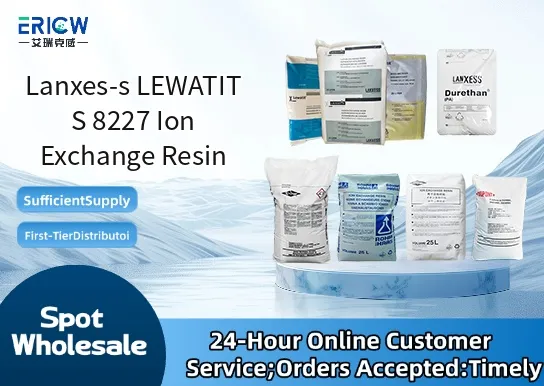
Highly selective for softening and removal of multivalent cations (e.g., Ca²⁺, Mg²⁺, Fe³⁺) in challenging feed waters.
Exceptional physical and chemical stability under repeated regeneration cycles with sodium chloride brine.
Optimized bead uniformity and narrow particle size distribution for low pressure drop and consistent hydraulic performance.
Low soluble organic carbon (SOC) release, minimizing post-treatment contamination in sensitive applications.
Designed for high-capacity operation in both downflow and upflow service configurations.
Industrial boiler feed water pretreatment to prevent scale formation and corrosion.
Food & beverage processing water softening for consistent product quality and equipment protection.
Pharmaceutical purified water (PW) and water-for-injection (WFI) primary softening stage.
Municipal drinking water hardness reduction in decentralized treatment systems.
Electronics manufacturing ultrapure water (UPW) pretreatment for semiconductor rinse processes.
| Chemical Type | Sulfonated polystyrene-divinylbenzene copolymer (strong acid cation) |
| Product Form | Na⁺ form (pre-conditioned) |
| Appearance | Uniform amber spherical beads |
| Primary Applications | Water softening, demineralization pretreatment, heavy metal removal |
| Key Features | High exchange capacity, excellent osmotic stability, low fines generation |
| Benefits | Extended service life, reduced regenerant consumption, minimal leakage of hardness ions |
| Functional Group | Sulfonic acid (–SO₃H) |
| Matrix Structure | Macroporous |
Q1: What is the primary functional group and ionic form of LEWATIT S 8227?
A: LEWATIT S 8227 is a strongly acidic cation exchange resin based on a styrene-divinylbenzene matrix, functionalized with sulfonic acid groups. It is supplied in the sodium (Na⁺) form, making it suitable for softening and selective cation removal applications.
Q2: Is LEWATIT S 8227 suitable for food-grade or pharmaceutical water treatment?
A: Yes — LEWATIT S 8227 is manufactured and tested to meet requirements for use in the production of potable water and process water in food and pharmaceutical applications, provided it is properly regenerated and rinsed according to standard operating procedures and relevant local regulatory expectations.
Q3: How does LEWATIT S 8227 compare to conventional gel-type cation resins in terms of kinetic performance and fouling resistance?
A: As a macroporous resin, LEWATIT S 8227 offers enhanced mass transfer kinetics and improved tolerance toward organic fouling and suspended solids compared to standard gel-type resins, particularly in feedwaters with moderate levels of natural organic matter or oxidants.
Q4: What regeneration chemicals are recommended, and how does regeneration efficiency depend on operating conditions?
A: Sodium chloride (NaCl) is the standard regenerant for softening service. Regeneration efficiency depends on factors including brine concentration, flow rate, contact time, and the degree of exhaustion — optimal performance is achieved when regeneration parameters are tailored to the specific system design and feedwater composition.
Contact With Us:
E-mail: wangxingqiang@ericwchem.com
Have a Questions? Call Us:
Add:
Building A1, Jiete Industrial Park, Huangpu District, Guangzhou City, Guangdong Province, China