English
 Español
 tiếng việt
 русский
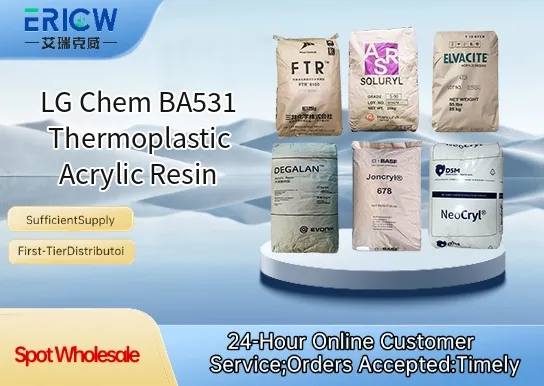
Excellent transparency and optical clarity for high-end aesthetic applications.
Superior weather resistance and UV stability without yellowing over extended outdoor exposure.
Good melt flow properties enabling efficient extrusion, injection molding, and film casting.
High surface hardness and scratch resistance compared to standard acrylic resins.
Compatible with common solvents and suitable for solvent-based coating formulations.
Automotive interior trim and decorative overlays.
Transparent protective films for electronic displays and touch panels.
High-gloss rigid packaging for cosmetics and premium consumer goods.
Solvent-borne clear coats for architectural and industrial finishes.
Optical-grade light guide plates and diffuser sheets in LED lighting systems.
| Chemical Type | Thermoplastic acrylic copolymer |
| Product Form | Pellets |
| Appearance | White to off-white translucent granules |
| Primary Applications | Extrusion, injection molding, solvent coating, film casting |
| Key Features | High transparency, UV stability, good melt processability |
| Benefits | Enhanced surface durability, excellent color retention, low VOC formulation compatibility |
| Recommended Processing Temperature Range | 180–220 °C |
| Storage Conditions | Store in cool, dry place; protect from moisture and direct sunlight |
Q1: What are the primary processing methods suitable for BA531?
A: BA531 is designed for melt-processing techniques including extrusion, injection molding, and compression molding. Its thermoplastic nature allows for repeated thermal cycling without chemical degradation, making it well-suited for high-speed industrial processing lines.
Q2: How does BA531 enhance surface properties in coating and ink formulations?
A: As a film-forming binder, BA531 contributes excellent gloss, clarity, and scratch resistance to solvent-based and high-solids coatings. It also improves substrate adhesion and provides good leveling characteristics during drying or curing stages.
Q3: Is BA531 compatible with common plasticizers and other acrylic resins?
A: Yes—BA531 exhibits broad compatibility with conventional plasticizers (e.g., phthalates, adipates) and blends readily with other thermoplastic acrylics and certain styrenic polymers. Compatibility should always be verified experimentally under intended formulation conditions.
Q4: What solvents are typically used to dissolve BA531 for solution applications?
A: BA531 dissolves readily in common organic solvents such as methyl ethyl ketone (MEK), methyl isobutyl ketone (MIBK), toluene, xylene, and ester-based solvents like ethyl acetate. Solvent selection should consider evaporation rate, safety requirements, and final film performance.
Q5: Can BA531 be used in food-contact applications?
A: BA531 is not pre-approved for direct food-contact use. Customers intending to use it in food packaging or processing equipment must conduct full regulatory evaluation—including migration testing and compliance verification—according to applicable regional regulations and end-use conditions.
Contact With Us:
E-mail: wangxingqiang@ericwchem.com
Have a Questions? Call Us:
Add:
Building A1, Jiete Industrial Park, Huangpu District, Guangzhou City, Guangdong Province, China