English
 Español
 tiếng việt
 русский
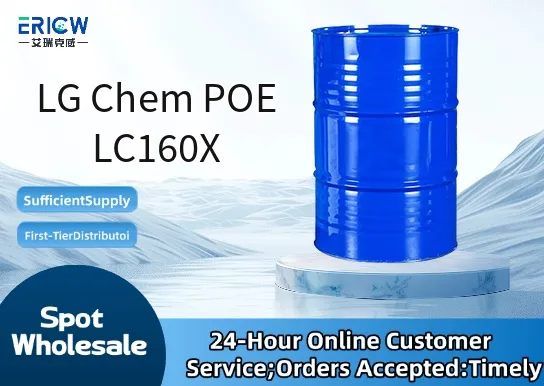
Outstanding long-term thermal and oxidative stability for extended service life in demanding environments.
Excellent low-temperature flexibility and impact resistance down to –40 °C.
Superior compatibility with polyolefin matrices, enabling uniform dispersion and enhanced blend performance.
Low extractables and high purity, meeting stringent requirements for food-contact and medical-grade applications.
Process-friendly rheology with consistent melt flow behavior for stable extrusion and injection molding.
Automotive interior trim components requiring soft-touch feel and UV resistance.
Flexible packaging films where seal integrity and puncture resistance are critical.
Medical tubing and device housings requiring biocompatibility and sterilization stability.
Weather-resistant cable jacketing and insulation for outdoor electrical infrastructure.
TPE-based consumer goods such as grips, seals, and overmolded handles.
| Chemical Type | Polyolefin Elastomer (POE), ethylene-octene copolymer |
| Product Form | Pellets |
| Appearance | Off-white to light beige, free-flowing granules |
| Primary Applications | Thermoplastic elastomer blends, flexible packaging, automotive soft-touch parts |
| Key Features | High elasticity, excellent processability, low compression set |
| Benefits | Improved toughness vs. PP/PE, reduced part weight, recyclability in polyolefin streams |
| Density (g/cm³) | 0.870–0.875 |
| Melt Flow Rate (190 °C/2.16 kg, g/10 min) | 1.0–1.5 |
Q1: What is the primary function of LG Chem POE LC160X in polymer formulations?
A: LG Chem POE LC160X is an ethylene-octene copolymer elastomer designed primarily as a toughening agent and impact modifier—especially for rigid polyolefin systems such as PP and HDPE—enhancing ductility, low-temperature impact resistance, and melt processability without significantly compromising stiffness.
Q2: Is LC160X compatible with polypropylene-based automotive interior compounds?
A: Yes, LC160X demonstrates excellent compatibility with homopolymer and copolymer polypropylenes commonly used in automotive interior applications. It supports consistent dispersion and interfacial adhesion, contributing to improved scratch resistance and long-term dimensional stability under thermal cycling conditions.
Q3: How does LC160X differ from conventional EPR or EPDM impact modifiers?
A: Unlike traditional EPR or EPDM elastomers, LC160X features a narrow molecular weight distribution and uniform octene comonomer incorporation, resulting in superior shear sensitivity control during extrusion and injection molding, more predictable rheology, and enhanced clarity in thin-gauge applications where phase morphology is critical.
Q4: Can LC160X be used in food-contact-approved polyolefin packaging?
A: LC160X is manufactured under stringent quality control protocols suitable for indirect food contact applications when incorporated into compliant base resins and processed according to established good manufacturing practices. Final regulatory compliance depends on the full formulation, processing conditions, and end-use requirements.
Contact With Us:
E-mail: wangxingqiang@ericwchem.com
Have a Questions? Call Us:
Add:
Building A1, Jiete Industrial Park, Huangpu District, Guangzhou City, Guangdong Province, China