English
 Español
 tiếng việt
 русский
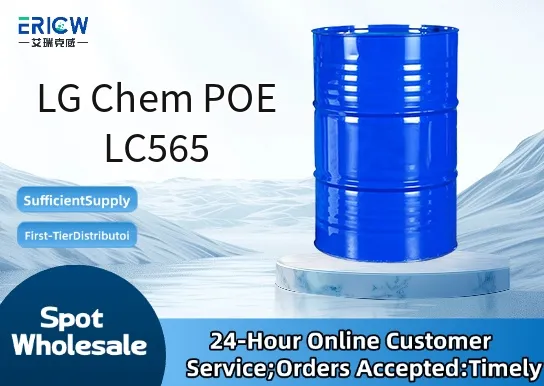
Outstanding long-term heat resistance for extended service life in high-temperature environments.
Excellent melt flow stability enabling consistent processing across extrusion and injection molding operations.
Superior compatibility with polypropylene (PP) and polyethylene (PE), facilitating homogeneous blending and enhanced mechanical performance.
Low dielectric constant and dissipation factor, supporting reliable electrical insulation properties.
Halogen-free formulation meeting stringent environmental and regulatory requirements for sustainable manufacturing.
Automotive interior components requiring thermal durability and low VOC emissions.
Wire and cable jacketing for industrial and renewable energy applications.
Flexible packaging films demanding clarity, seal integrity, and moisture barrier synergy.
Toughened polypropylene compounds for structural parts in appliances and consumer electronics.
Photovoltaic encapsulation materials where UV stability and adhesion to EVA/glass are critical.
| Chemical Type | Polyolefin Elastomer (POE) |
| Product Form | Pellets |
| Appearance | Off-white to light beige, free-flowing granules |
| Primary Applications | Thermoplastic elastomer modifier, PP/PE impact modifier, wire & cable insulation |
| Key Features | High elasticity, excellent processability, halogen-free |
| Benefits | Improved toughness, reduced part warpage, enhanced recyclability |
| Melt Flow Index (190°C/2.16 kg) | 0.5–1.0 g/10 min |
| Density (ASTM D792) | 0.870–0.875 g/cm³ |
Q1: What is the primary function of LG Chem POE LC565 in polymer formulations?
A: LG Chem POE LC565 is a polyolefin elastomer designed to enhance impact resistance, flexibility, and melt processability—particularly in polypropylene (PP) and polyethylene (PE)-based systems. It functions as a reactive or non-reactive compatibilizer and toughening agent, improving ductility without significantly compromising stiffness.
Q2: Is LG Chem POE LC565 suitable for food-contact applications?
A: LG Chem POE LC565 is formulated for use in applications where regulatory compliance is required, including certain food-contact scenarios. Final suitability depends on the complete formulation, processing conditions, and applicable regional regulations—users must conduct full regulatory validation and obtain appropriate documentation from LG Chem or authorized representatives before use in food-contact articles.
Q3: How does LG Chem POE LC565 compare to conventional EPDM or EPR impact modifiers?
A: Unlike traditional diene-based elastomers, POE LC565 offers superior thermal stability, narrower molecular weight distribution, and improved compatibility with polyolefins due to its saturated backbone. This results in better long-term aging performance, enhanced clarity in transparent compounds, and more consistent dispersion during compounding.
Q4: What are typical processing recommendations for POE LC565?
A: POE LC565 processes well using standard polyolefin equipment—including twin-screw extruders and injection molding machines. It exhibits good thermal stability up to typical PP/PE processing temperatures and generally requires no special drying prior to processing. Optimal residence time and shear profile should be adjusted based on the base resin and desired morphology development.
Q5: What is the typical dosage range for LG Chem POE LC565 in impact-modified PP compounds?
A: Dosage depends on the target balance of impact strength, stiffness, and flow behavior. In homopolymer PP systems, POE LC565 is typically used at low concentrations—generally ranging from 0.1% to 2% by weight for minor toughness enhancement, and up to 15–25% for high-impact or flexible grades. Formulators are advised to optimize through systematic testing.
Contact With Us:
E-mail: wangxingqiang@ericwchem.com
Have a Questions? Call Us:
Add:
Building A1, Jiete Industrial Park, Huangpu District, Guangzhou City, Guangdong Province, China