English
 Español
 tiếng việt
 русский
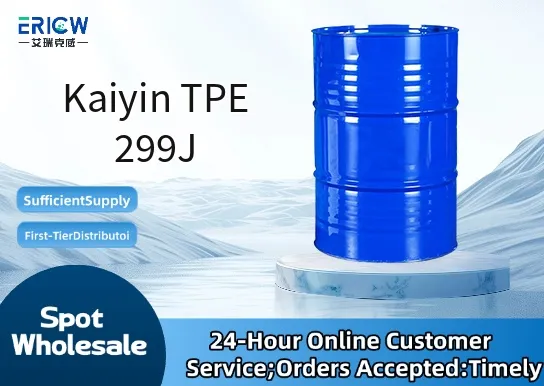
Excellent elasticity and recovery performance for dynamic sealing applications.
Good processability via injection molding and extrusion without pre-drying.
Low compression set ensuring long-term dimensional stability under repeated stress.
Enhanced oil and grease resistance compared to conventional SEBS-based TPEs.
RoHS-compliant formulation with no halogens, heavy metals, or phthalates.
Automotive interior trim components including door seals and dashboard gaskets.
Consumer electronics protective cases and soft-touch overmolded grips.
Medical device housings requiring biocompatibility and sterilization compatibility.
Household appliance seals and vibration-damping feet for small appliances.
Industrial tool handles offering ergonomic comfort and slip resistance.
| Chemical Type | Thermoplastic Elastomer (SEBS-based) |
| Product Form | Pellets |
| Appearance | Off-white to light beige, free-flowing granules |
| Primary Applications | Overmolding, soft-touch components, dynamic seals |
| Key Features | Elasticity, oil resistance, low compression set, easy processing |
| Benefits | Reduced cycle time, improved part consistency, recyclable scrap |
| Processing Temperature Range | 180–220 °C (recommended barrel zone setting) |
| Storage Conditions | Keep in dry, cool place (<30 °C); seal bag after opening |
Q1: What is Kaiyin TPE 299J primarily used for?
A: Kaiyin TPE 299J is a thermoplastic elastomer modifier designed to enhance flexibility, resilience, and processability in rigid polymer blends—especially in polypropylene (PP) and polyethylene (PE) systems. It is commonly employed in soft-touch overmolding, automotive interior components, and consumer product housings requiring improved impact resistance and tactile feel.
Q2: Is Kaiyin TPE 299J compatible with common processing methods?
A: Yes—it is fully compatible with standard thermoplastic processing techniques including injection molding, extrusion, and two-shot molding. Its thermal stability and low melt viscosity support consistent flow and good interfacial adhesion in multi-material assemblies without requiring specialized equipment or pre-drying beyond typical TPE handling practices.
Q3: How does Kaiyin TPE 299J affect the mechanical properties of base resins?
A: When compounded into PP or PE matrices, it significantly improves elongation at break and notch sensitivity while maintaining acceptable tensile strength and stiffness. The degree of property modification depends on loading level and dispersion quality, but users typically observe balanced toughness–rigidity trade-offs suitable for structural yet flexible applications.
Q4: Can Kaiyin TPE 299J be used in applications requiring regulatory compliance for food contact or skin exposure?
A: Kaiyin TPE 299J is formulated without intentionally added heavy metals, phthalates, or known allergens, and is widely selected for products where low-extractable, non-toxic performance is valued. However, final regulatory acceptance depends on full formulation, processing conditions, and end-use requirements—users are advised to conduct application-specific testing and consult local compliance guidelines.
Contact With Us:
E-mail: wangxingqiang@ericwchem.com
Have a Questions? Call Us:
Add:
Building A1, Jiete Industrial Park, Huangpu District, Guangzhou City, Guangdong Province, China