English
 Español
 tiếng việt
 русский
Exceptional transparency and optical clarity, comparable to acrylic and polycarbonate.
Outstanding weatherability and UV resistance without requiring additional stabilizers.
Excellent adhesion to engineering thermoplastics such as PC, ABS, and PMMA in co-injection or overmolding.
Low extractables and low volatility—suitable for applications demanding high purity and low odor.
Thermoplastic processability with melt flow suitable for injection molding, extrusion, and blow molding.
Transparent soft-touch overmolds for consumer electronics housings and control panels.
UV-stable gaskets and seals for outdoor lighting and automotive exterior trim.
Optically clear grips and ergonomic components for medical handheld devices.
Transparent flexible tubing and fluid-handling components in analytical instrumentation.
Decorative transparent elastomeric films for architectural glazing and signage overlays.
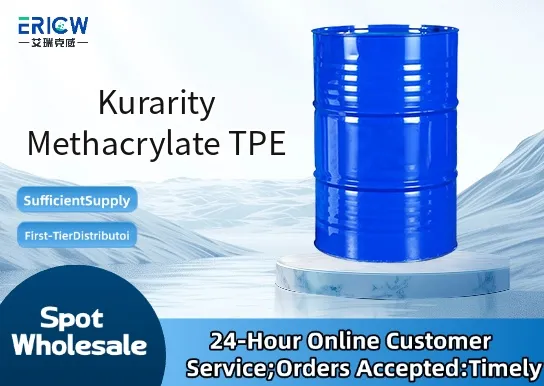
| Chemical Type | Methacrylate-based thermoplastic elastomer (TPE) |
| Product Form | Pellets |
| Appearance | Transparent, colorless granules |
| Primary Applications | Overmolding, co-extrusion, soft-touch components, optical elastomers |
| Key Features | High transparency, UV stability, substrate adhesion, low extractables |
| Processing Method | Injection molding, extrusion, blow molding |
| Standard Packaging | 25 kg multi-wall paper bags with polyethylene liner |
| Storage Conditions | Store in cool, dry environment; protect from direct sunlight and moisture |
Q1: What is the primary function of Kurarity Methacrylate TPE in polymer formulations?
A: Kurarity Methacrylate TPE functions primarily as a reactive compatibilizer and impact modifier—enhancing interfacial adhesion between dissimilar polymers (e.g., polyolefins and polar resins) while contributing thermoplastic elastomeric behavior without sacrificing processability.
Q2: Is Kurarity Methacrylate TPE suitable for use in food-contact applications?
A: Kurarity Methacrylate TPE is designed with non-toxic monomer units and low volatility, supporting compliance in certain food-contact scenarios when incorporated into finished articles meeting applicable regulatory requirements—however, final compliance depends on full formulation, processing conditions, and end-use migration testing.
Q3: How does Kurarity Methacrylate TPE differ from conventional styrenic or olefinic TPEs?
A: Unlike traditional TPEs, Kurarity Methacrylate TPE features a methacrylate-based backbone offering superior UV stability, enhanced polarity for improved adhesion to engineering plastics and coatings, and a more uniform phase morphology—enabling consistent mechanical performance across temperature variations.
Q4: What processing methods are compatible with Kurarity Methacrylate TPE?
A: Kurarity Methacrylate TPE is fully compatible with standard thermoplastic processing techniques including injection molding, extrusion, and two-shot molding—exhibiting good melt flow, thermal stability up to typical processing temperatures, and minimal degradation under recommended residence times.
Contact With Us:
E-mail: wangxingqiang@ericwchem.com
Have a Questions? Call Us:
Add:
Building A1, Jiete Industrial Park, Huangpu District, Guangzhou City, Guangdong Province, China