English
 Español
 tiếng việt
 русский
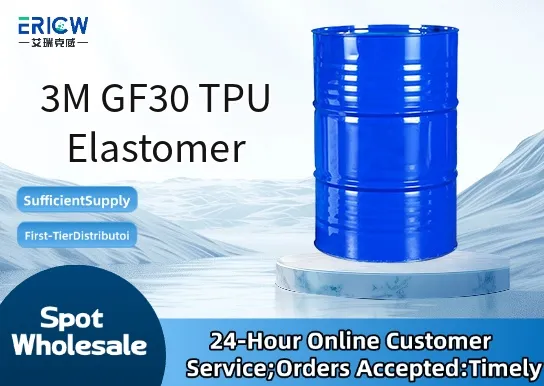
30% by weight glass fiber reinforced thermoplastic polyurethane for enhanced stiffness and dimensional stability.
Excellent abrasion resistance and mechanical toughness suitable for demanding dynamic service conditions.
Good processability via injection molding and extrusion with low moisture sensitivity compared to standard TPU grades.
Retains high elasticity and impact resilience despite fiber reinforcement, balancing rigidity and energy absorption.
RoHS-compliant formulation with no added halogenated flame retardants or heavy metals.
Automotive interior trim components requiring structural integrity and tactile softness.
Industrial rollers and conveyor parts subject to wear, bending, and repetitive loading.
Heavy-duty tool handles and ergonomic grips needing vibration damping and non-slip surface performance.
Protective housings for power tools and portable equipment requiring impact resistance and thermal stability.
Dynamic seals and gaskets in fluid handling systems where chemical resistance and compression set resistance are critical.
| Chemical Type | Glass fiber-reinforced thermoplastic polyurethane (TPU) |
| Product Form | Natural-colored pellets |
| Appearance | Opaque, granular, free-flowing pellets |
| Primary Applications | Structural elastomeric components, wear-resistant parts, semi-rigid functional housings |
| Key Features | High stiffness-to-weight ratio, excellent fatigue resistance, good UV stability (with optional stabilizers) |
| Benefits | Reduced part warpage vs. unfilled TPU, improved creep resistance, recyclable thermoplastic processing |
| Density | Approx. 1.24 g/cm³ (ASTM D792) |
| Melt Flow Rate (230°C/2.16 kg) | 8–12 g/10 min (ASTM D1238) |
Q1: What is the primary function of 3M GF30 TPU Elastomer in polymer formulations?
A: 3M GF30 TPU Elastomer is a functionalized thermoplastic polyurethane designed to enhance melt strength, improve interfacial adhesion between dissimilar polymers, and increase toughness in blended or coextruded systems—particularly where TPU compatibility with rigid thermoplastics (e.g., PP, PET, or PC) is required.
Q2: Is 3M GF30 TPU Elastomer suitable for use in food-contact applications?
A: While 3M GF30 TPU Elastomer is based on FDA-compliant raw materials commonly used in food-contact polymers, final regulatory compliance depends on the complete formulation, processing conditions, and end-use requirements. Customers must conduct their own due diligence and validate suitability per applicable regional regulations.
Q3: How should 3M GF30 TPU Elastomer be processed in standard compounding equipment?
A: It is typically processed using conventional twin-screw extruders under standard TPU processing conditions—drying at 70–80 °C prior to feeding is recommended, and residence time should be minimized to avoid thermal degradation. It exhibits good dispersion characteristics and is compatible with common compounding additives such as stabilizers and pigments.
Q4: Can 3M GF30 TPU Elastomer be used as a compatibilizer in recycled polymer blends?
A: Yes—it has demonstrated effectiveness in improving phase morphology and mechanical performance in blends containing post-industrial or post-consumer recycled content, especially when combining rigid plastics with elastomeric fractions. Performance varies depending on the composition and contamination level of the recycled stream.
Contact With Us:
E-mail: wangxingqiang@ericwchem.com
Have a Questions? Call Us:
Add:
Building A1, Jiete Industrial Park, Huangpu District, Guangzhou City, Guangdong Province, China