English
 Español
 tiếng việt
 русский
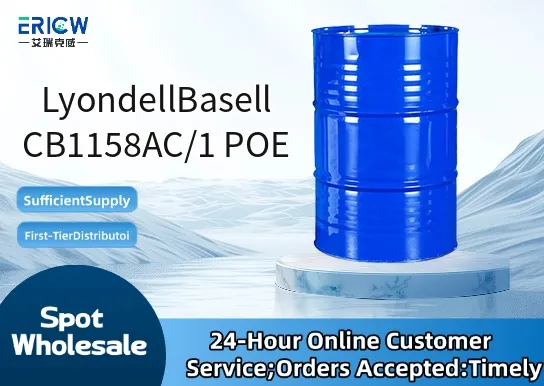
Excellent low-temperature flexibility and impact resistance down to –40 °C
Outstanding melt processability for high-output extrusion and injection molding
Superior compatibility with polypropylene (PP) and polyethylene (PE) matrices
Good UV stability and long-term weathering performance
Low extractables and compliant with FDA 21 CFR §177.1520 for food-contact applications
Automotive interior trim components (e.g., instrument panels, door handles)
Polypropylene impact modification for durable consumer goods
Flexible packaging sealant layers and coextruded films
Medical tubing and soft-touch overmolding for handheld devices
Weather-resistant building & construction profiles and seals
| Chemical Type | Ethylene-octene copolymer (POE) |
| Product Form | Natural-colored pellets |
| Appearance | Free-flowing cylindrical pellets, uniform size |
| Primary Applications | PP/PE impact modifier, flexible packaging, automotive soft-touch |
| Key Features | Low density, high elasticity, excellent clarity |
| Benefits | Enhanced toughness without sacrificing stiffness; recyclable in PE/PP streams |
| Processing Method | Injection molding, extrusion, blow molding |
| Regulatory Compliance | FDA 21 CFR §177.1520, RoHS, REACH SVHC-free |
Q1: What is the primary function of CB1158AC/1 POE in polymer formulations?
A: CB1158AC/1 is a polyolefin elastomer designed primarily as a toughening agent and impact modifier—especially for polypropylene and other semi-crystalline thermoplastics—enhancing ductility, low-temperature impact resistance, and melt processability without significantly compromising stiffness.
Q2: Is CB1158AC/1 compatible with filled or reinforced polypropylene systems?
A: Yes—CB1158AC/1 demonstrates good compatibility with common mineral-filled (e.g., talc, calcium carbonate) and glass-fiber-reinforced polypropylene compounds, supporting uniform dispersion and interfacial adhesion while maintaining balanced mechanical performance.
Q3: How does CB1158AC/1 differ from conventional EPDM or EPR impact modifiers?
A: Unlike traditional diene-based elastomers, CB1158AC/1 is a metallocene-catalyzed ethylene-octene copolymer with narrow molecular weight distribution and uniform comonomer incorporation—offering improved clarity, lower extractables, and more consistent rheological behavior during compounding and injection molding.
Q4: What processing methods are recommended for CB1158AC/1-containing compounds?
A: CB1158AC/1 is well-suited for standard thermoplastic processing techniques including twin-screw compounding, injection molding, and extrusion. It exhibits good thermal stability under typical PP processing conditions and requires no special drying prior to use.
Contact With Us:
E-mail: wangxingqiang@ericwchem.com
Have a Questions? Call Us:
Add:
Building A1, Jiete Industrial Park, Huangpu District, Guangzhou City, Guangdong Province, China