English
 Español
 tiếng việt
 русский
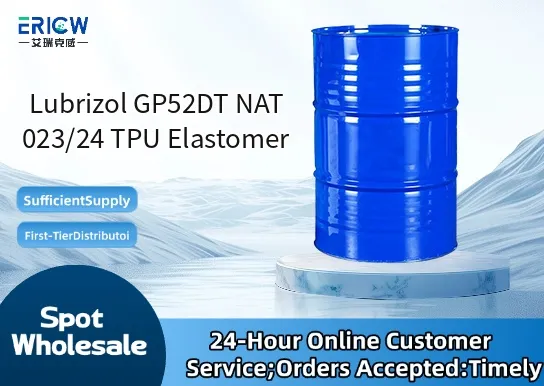
High transparency and excellent optical clarity for premium aesthetic performance.
Outstanding abrasion resistance and mechanical toughness suitable for demanding dynamic applications.
Good processability on standard thermoplastic equipment, including injection molding and extrusion.
Hydrolysis-stabilized formulation ensuring long-term performance in humid or warm environments.
Non-toxic, FDA-compliant formulation suitable for indirect food contact and medical device components.
Medical tubing and fluid delivery systems requiring kink resistance and biocompatibility.
Transparent protective films and overmolded grips for consumer electronics and handheld devices.
High-clarity seals and gaskets in pharmaceutical packaging and diagnostic equipment.
Wear-resistant components in sporting goods, including protective pads and flexible casings.
Soft-touch overmolding for automotive interior trim and control interfaces.
| Chemical Type | Aliphatic polyester-based thermoplastic polyurethane (TPU) |
| Product Form | Pellets |
| Appearance | Translucent, natural-colored granules |
| Primary Applications | Medical devices, transparent elastomeric parts, soft-touch overmolding |
| Key Features | Hydrolysis resistance, high clarity, low extractables, melt-processable |
| Benefits | Regulatory compliance support (USP Class VI, ISO 10993), consistent batch-to-batch quality |
| Processing Temperature Range | 180–210 °C (recommended melt temperature) |
| Storage Conditions | Store in original sealed packaging at ≤25 °C and <40% RH |
Q1: What is the primary function of Lubrizol GP52DT NAT in TPU formulations?
A: GP52DT NAT is a specialized polymeric processing aid designed to enhance melt flow, reduce extrusion pressure, and improve surface finish in thermoplastic polyurethane (TPU) compounds—particularly during high-speed extrusion and calendering processes.
Q2: Is GP52DT NAT compatible with all major TPU chemistries (e.g., polyester-, polyether-, and polycaprolactone-based TPUs)?
A: Yes, GP52DT NAT demonstrates broad compatibility across common TPU base resins, including polyester-, polyether-, and polycaprolactone-based systems. Compatibility should still be verified under actual processing conditions due to formulation-specific variables such as molecular weight distribution and additive interactions.
Q3: How does GP52DT NAT affect the mechanical properties of the final TPU product?
A: When used at recommended dosage levels, GP52DT NAT typically has minimal impact on tensile strength, elongation, or hardness. Its primary role is process-related, and it is not intended to function as a reinforcing or plasticizing agent—mechanical performance remains governed by the base TPU resin and overall formulation design.
Q4: Can GP52DT NAT be used in applications requiring food contact or medical device compliance?
A: GP52DT NAT is not pre-qualified for food contact or medical device applications. Customers pursuing such uses must conduct full regulatory evaluation—including extractables/leachables testing and end-use compliance verification—against applicable regional requirements, as Lubrizol does not provide regulatory certifications for this grade.
Contact With Us:
E-mail: wangxingqiang@ericwchem.com
Have a Questions? Call Us:
Add:
Building A1, Jiete Industrial Park, Huangpu District, Guangzhou City, Guangdong Province, China