English
 Español
 tiếng việt
 русский
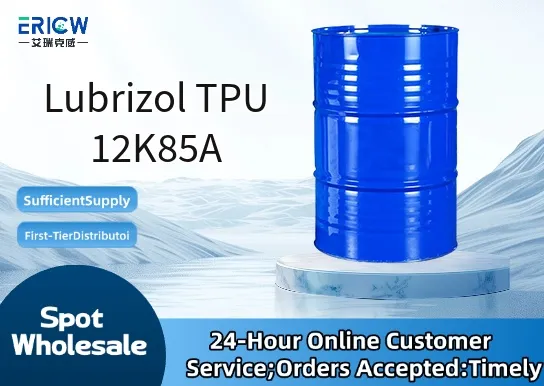
Excellent abrasion resistance for demanding dynamic applications.
Outstanding low-temperature flexibility down to –40 °C.
Good hydrolytic stability suitable for humid or wet environments.
High tensile strength and elongation at break for robust mechanical performance.
Compatible with common thermoplastic processing methods including extrusion, injection molding, and blow molding.
Automotive interior trim components such as instrument panel skins and door armrests.
Industrial hoses and pneumatic tubing requiring flexibility and pressure resistance.
Medical device tubing and connectors compliant with ISO 10993 biocompatibility guidelines (pending full evaluation).
Consumer electronics protective cases and wearable device straps.
Footwear midsoles and outsoles where energy return and durability are critical.
| Chemical Type | Thermoplastic Polyurethane (TPU), polyester-based |
| Product Form | Pellets |
| Appearance | Off-white to light tan, free-flowing granules |
| Hardness (Shore A) | 85 ± 2 |
| Density (g/cm³) | 1.18–1.20 |
| Melt Flow Index (g/10 min, 210 °C/2.16 kg) | 12–15 |
| Primary Applications | Extruded profiles, molded parts, flexible tubing, soft-touch overmolding |
| Key Features | Abrasion resistance, low-temperature flexibility, processability, hydrolytic stability |
Q1: What is Lubrizol TPU 12K85A primarily used for?
A: Lubrizol TPU 12K85A is a thermoplastic polyurethane-based additive designed to enhance melt processability, surface finish, and low-temperature flexibility in TPU compounds—particularly in extruded and injection-molded applications such as tubing, film, and soft-touch overmolding.
Q2: Is Lubrizol TPU 12K85A compatible with all TPU chemistries?
A: It demonstrates broad compatibility with aromatic and aliphatic polyester- and polyether-based TPUs, though optimal performance is typically observed with medium-to-high molecular weight TPUs. Compatibility screening under actual processing conditions is recommended for new formulations.
Q3: How is Lubrizol TPU 12K85A typically incorporated into TPU formulations?
A: It is commonly added directly via dry blending or gravimetric feeding prior to extrusion or injection molding. Due to its thermoplastic nature, it melts and disperses homogeneously during standard TPU processing without requiring pre-dissolution or reactive handling.
Q4: Does Lubrizol TPU 12K85A affect the final mechanical properties of the TPU compound?
A: At typical use levels, it maintains or slightly improves elongation and tear resistance while reducing melt viscosity—without significantly compromising tensile strength or hardness. The extent of property modification depends on loading level and base polymer characteristics.
Contact With Us:
E-mail: wangxingqiang@ericwchem.com
Have a Questions? Call Us:
Add:
Building A1, Jiete Industrial Park, Huangpu District, Guangzhou City, Guangdong Province, China