English
 Español
 tiếng việt
 русский
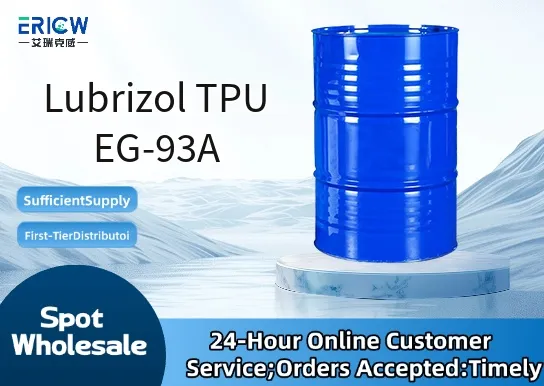
Excellent melt processability for efficient extrusion and injection molding.
Outstanding abrasion resistance and mechanical toughness at ambient and elevated temperatures.
Good low-temperature flexibility with a glass transition temperature (Tg) near −35 °C.
High clarity and gloss retention in thin-gauge applications.
Compatible with common plasticizers and polymer blends for formulation flexibility.
Medical tubing and fluid delivery systems requiring biocompatibility support.
High-performance automotive interior trim and soft-touch overlays.
Consumer electronics protective casings and wearable device components.
Industrial hoses and pneumatic tubing demanding resilience and kink resistance.
Footwear midsoles and outsoles requiring energy return and durability.
| Chemical Type | Aliphatic polyester-based thermoplastic polyurethane |
| Product Form | Pellets |
| Appearance | Translucent, off-white pellets |
| Primary Applications | Extruded films, blow-molded parts, injection-molded components |
| Key Features | Melt flow index (230 °C/2.16 kg): 12–16 g/10 min |
| Benefits | Low extractables, FDA-compliant for indirect food contact (per 21 CFR) |
| Processing Range | Recommended melt temperature: 190–220 °C |
| Storage Conditions | Store in original sealed packaging at <25 °C and <50% RH |
Q1: What is the primary function of Lubrizol TPU EG-93A in thermoplastic polyurethane (TPU) formulations?
A: Lubrizol TPU EG-93A is a high-performance processing aid and surface modifier designed to improve melt flow, reduce extrusion torque, and enhance surface gloss and slip characteristics in TPU compounds—without compromising mechanical integrity or thermal stability.
Q2: Is Lubrizol TPU EG-93A compatible with all major TPU chemistries (e.g., polyester-, polyether-, and polycaprolactone-based TPUs)?
A: Yes, EG-93A demonstrates broad compatibility across common TPU base resins, including aromatic and aliphatic variants. Its performance may vary slightly depending on polymer polarity and molecular weight, so formulation optimization is recommended for each specific system.
Q3: How is Lubrizol TPU EG-93A typically incorporated into TPU processing?
A: It is most commonly added directly during compounding—either via side-feeding in twin-screw extrusion or pre-blended with the TPU resin prior to melting. Due to its solid, free-flowing pellet form, it offers excellent handling and dispersion consistency without requiring solvents or premixing steps.
Q4: Does Lubrizol TPU EG-93A affect the final product’s regulatory compliance for food-contact or medical applications?
A: EG-93A is not inherently certified for food-contact or medical use. Its suitability for regulated applications depends entirely on the full formulation, processing conditions, and end-use requirements. Customers must conduct their own regulatory evaluation and validation as part of the final product approval process.
Contact With Us:
E-mail: wangxingqiang@ericwchem.com
Have a Questions? Call Us:
Add:
Building A1, Jiete Industrial Park, Huangpu District, Guangzhou City, Guangdong Province, China