English
 Español
 tiếng việt
 русский
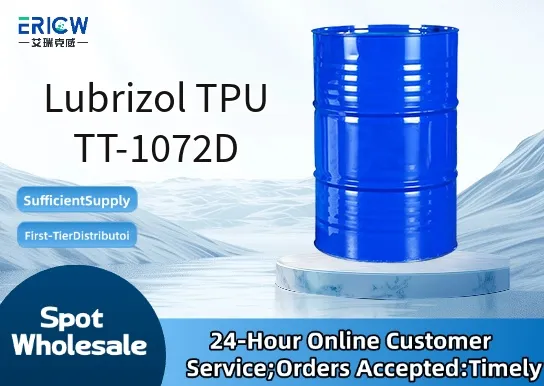
Excellent melt processability for high-speed extrusion and injection molding.
Outstanding abrasion resistance and mechanical toughness at ambient and low temperatures.
Good hydrolytic stability, enhancing long-term performance in humid or wet environments.
High clarity and gloss retention, ideal for premium aesthetic applications.
Compatible with common plasticizers and additives for tailored formulation flexibility.
Medical tubing and fluid delivery systems requiring biocompatibility support.
Automotive interior trim components including soft-touch overlays and seals.
Consumer electronics protective cases and wearable device housings.
Industrial hoses and pneumatic tubing demanding flexibility and durability.
High-performance sporting goods such as ski boot cuffs and athletic wear components.
| Chemical Type | Thermoplastic Polyurethane (TPU), Polyester-based |
| Product Form | Pellets |
| Appearance | Translucent, natural-colored pellets |
| Primary Applications | Extrusion, injection molding, blow molding |
| Key Features | Melt flow index (230 °C/2.16 kg): 15–22 g/10 min |
| Benefits | Enhanced surface finish, low compression set, good UV resistance |
| Processing Temperature Range | 190–230 °C (recommended barrel zone profile) |
| Storage Conditions | Store in dry, cool conditions; desiccant drying recommended prior to processing |
Q1: What is the primary function of Lubrizol TPU TT-1072D in thermoplastic polyurethane (TPU) formulations?
A: Lubrizol TPU TT-1072D is a high-performance processing aid and surface modifier designed to improve melt flow, reduce extrusion pressure, and enhance surface gloss and slip characteristics in TPU compounds—without compromising mechanical integrity or thermal stability.
Q2: Is TT-1072D compatible with all major TPU chemistries (e.g., polyester-, polyether-, and polycaprolactone-based TPUs)?
A: Yes, TT-1072D demonstrates broad compatibility across common TPU backbone types. It is particularly effective in aromatic polyester-based TPUs used for demanding extrusion and calendering applications, though optimal performance should be verified through formulation-specific testing.
Q3: How is TT-1072D typically incorporated into TPU processing?
A: It is commonly introduced via dry blending prior to extrusion or injection molding. Due to its solid, free-flowing pellet form, it disperses readily during melt compounding and does not require pre-drying under standard handling conditions.
Q4: Does TT-1072D affect the regulatory compliance status of finished TPU articles?
A: TT-1072D is formulated without intentionally added heavy metals, phthalates, or halogenated flame retardants. While it is not itself subject to food-contact or medical-device regulations, its inclusion may influence the overall compliance profile of the final compound—formulators are advised to conduct full regulatory assessment based on end-use requirements.
Contact With Us:
E-mail: wangxingqiang@ericwchem.com
Have a Questions? Call Us:
Add:
Building A1, Jiete Industrial Park, Huangpu District, Guangzhou City, Guangdong Province, China