English
 Español
 tiếng việt
 русский
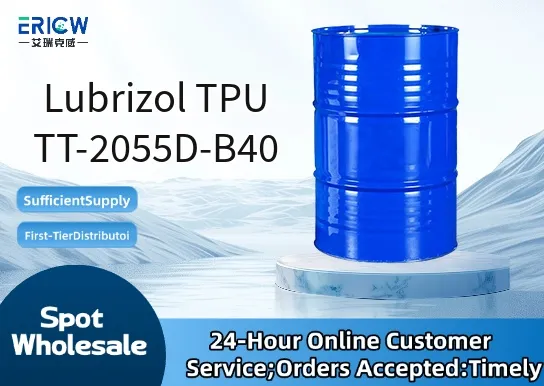
Excellent abrasion resistance for demanding dynamic applications.
Outstanding low-temperature flexibility down to –40 °C.
Good hydrolytic stability suitable for humid or wet environments.
High melt flow index enabling efficient processing via extrusion and injection molding.
Consistent batch-to-batch performance with tight molecular weight distribution.
Automotive interior trim components including instrument panel skins and door panels.
Medical tubing requiring biocompatibility support and kink resistance.
Industrial hoses and pneumatic tubing exposed to flexing and moderate pressure.
Consumer electronics protective cases and wearable device straps.
Footwear midsoles and outsoles requiring rebound resilience and durability.
| Chemical Type | Thermoplastic Polyurethane (TPU), polyester-based |
| Product Form | Pellets |
| Appearance | Off-white, free-flowing granules |
| Primary Applications | Extrusion, injection molding, and calendering |
| Key Features | Abrasion resistance, low-temperature flexibility, hydrolysis resistance |
| Benefits | Enhanced part longevity, reliable processability, consistent surface quality |
| Processing Temperature Range | 180–220 °C |
| Density (ASTM D792) | 1.18–1.20 g/cm³ |
Q1: What is the primary function of Lubrizol TPU TT-2055D-B40 in thermoplastic polyurethane (TPU) formulations?
A: Lubrizol TPU TT-2055D-B40 is a specialized processing aid and surface modifier designed to improve melt flow, reduce extrusion die buildup, and enhance surface gloss and slip characteristics in TPU compounds—without compromising mechanical integrity or thermal stability.
Q2: Is TT-2055D-B40 compatible with common TPU base resins, including aromatic and aliphatic grades?
A: Yes, TT-2055D-B40 demonstrates broad compatibility across major commercial TPU families—both aromatic and aliphatic—due to its tailored polymeric architecture and balanced polarity. Compatibility should be verified under actual processing conditions, especially for highly filled or reactive formulations.
Q3: How is TT-2055D-B40 typically incorporated into TPU production processes?
A: It is most commonly added during compounding via twin-screw extrusion, either as a masterbatch or direct feed. Due to its solid pellet form and thermal stability, it disperses readily at standard TPU processing temperatures and does not require pre-drying or special handling beyond standard TPU storage practices.
Q4: Does TT-2055D-B40 affect the regulatory compliance status of finished TPU articles?
A: TT-2055D-B40 is formulated without intentionally added heavy metals, phthalates, or restricted halogenated compounds. While it is not itself certified for food contact or medical use, its inclusion does not inherently preclude compliance—final regulatory acceptance depends on the full formulation, processing history, and end-use application requirements.
Contact With Us:
E-mail: wangxingqiang@ericwchem.com
Have a Questions? Call Us:
Add:
Building A1, Jiete Industrial Park, Huangpu District, Guangzhou City, Guangdong Province, China