English
 Español
 tiếng việt
 русский
Excellent melt processability for high-output extrusion and injection molding.
Outstanding low-temperature flexibility and impact resistance down to –40 °C.
Superior compatibility with polypropylene (PP) and polyethylene (PE) for enhanced blend performance.
Low extractables and excellent color stability—ideal for demanding automotive and consumer applications.
Halogen-free formulation supporting modern sustainability and regulatory compliance requirements.
Automotive interior trim components including door panels and instrument bezels.
Soft-touch overmolding for consumer electronics housings and appliance controls.
Flexible packaging films requiring toughness, seal integrity, and clarity.
Medical tubing and device components where biocompatibility and sterilization resistance are critical.
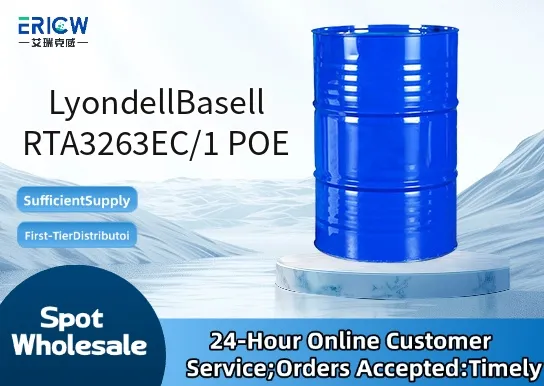
| Chemical Type | Polyolefin Elastomer (POE) — Ethylene-octene copolymer |
| Product Form | Pellets |
| Appearance | Natural, translucent granules |
| Primary Applications | Toughening agent, soft-touch modifier, flexible packaging base resin |
| Key Features | High elasticity, low compression set, excellent UV resistance |
| Benefits | Improved part durability, reduced warpage, enhanced recyclability in polyolefin streams |
| Processing Method | Injection molding, extrusion, blow molding |
Q1: What is the primary function of RTA3263EC/1 POE in polymer formulations?
A: RTA3263EC/1 is a polyolefin elastomer (POE) designed to enhance impact resistance and flexibility in polypropylene and polyethylene-based compounds, particularly in demanding applications such as automotive interior parts and durable consumer goods.
Q2: Is RTA3263EC/1 compatible with filled or reinforced polypropylene systems?
A: Yes, RTA3263EC/1 demonstrates good compatibility with mineral-filled, glass-fiber-reinforced, and talc-modified polypropylene matrices, supporting balanced stiffness-toughness performance without significant phase separation under standard compounding conditions.
Q3: How does RTA3263EC/1 differ from conventional EPDM-based impact modifiers?
A: Unlike EPDM, RTA3263EC/1 offers superior melt processability, narrower molecular weight distribution, and improved dispersion in polyolefin melts—resulting in more consistent mechanical properties and reduced risk of gel formation during extrusion or injection molding.
Q4: What are typical processing recommendations for RTA3263EC/1?
A: RTA3263EC/1 processes well using standard polyolefin equipment. Recommended melt temperatures typically range between 180 °C and 230 °C, with residence times kept moderate to preserve long-chain branching integrity and avoid thermal degradation.
Q5: Can RTA3263EC/1 be used in applications requiring low-temperature impact performance?
A: Yes, RTA3263EC/1 delivers excellent low-temperature ductility and notch sensitivity reduction in PP-based systems, making it suitable for automotive components and outdoor applications exposed to sub-zero service environments.
Contact With Us:
E-mail: wangxingqiang@ericwchem.com
Have a Questions? Call Us:
Add:
Building A1, Jiete Industrial Park, Huangpu District, Guangzhou City, Guangdong Province, China