English
 Español
 tiếng việt
 русский
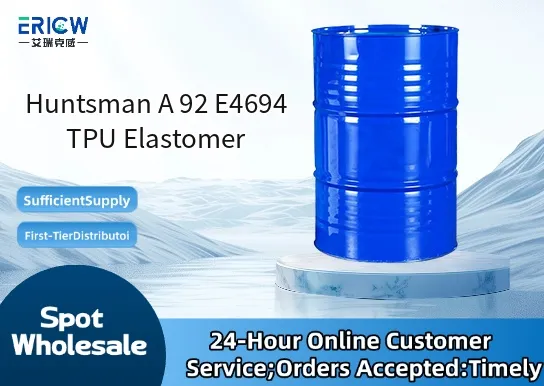
Excellent melt processability for efficient extrusion and injection molding.
Outstanding abrasion resistance and mechanical toughness at ambient and elevated temperatures.
Good hydrolytic stability, suitable for demanding environments with intermittent moisture exposure.
Low-temperature flexibility retention down to –30 °C without significant loss of elasticity.
Compatible with common TPU processing equipment and recyclable within closed-loop manufacturing systems.
High-performance automotive interior trim and soft-touch overlays.
Industrial hoses and fluid-conveying tubing requiring kink resistance and pressure resilience.
Protective casings and overmolded grips for power tools and handheld electronics.
Wear-resistant components in material handling systems, including conveyor belts and rollers.
Medical device housings and non-implantable components meeting ISO 10993-compatibility requirements.
| Chemical Type | Aliphatic polyester-based thermoplastic polyurethane (TPU) |
| Product Form | Pellets |
| Appearance | Off-white to light tan, free-flowing granules |
| Primary Applications | Extrusion, injection molding, and blow molding |
| Key Features | High tensile strength, excellent rebound elasticity, low compression set |
| Benefits | Reduced cycle times, improved surface finish, enhanced part durability |
| Processing Temperature Range | 180–220 °C (recommended barrel zone profile) |
| Storage Conditions | Store in original sealed packaging at ≤25 °C and <40% relative humidity |
Q1: What is the primary function of A 92 E4694 in TPU formulations?
A: A 92 E4694 is a specialty chain extender designed to enhance mechanical performance and processability in thermoplastic polyurethane (TPU) systems. It contributes to improved tensile strength, elongation retention, and melt stability during extrusion or injection molding.
Q2: Is A 92 E4694 compatible with aromatic and aliphatic TPU base resins?
A: Yes, A 92 E4694 demonstrates broad compatibility with both aromatic and aliphatic TPU prepolymers. Its reactivity profile allows effective incorporation across common diisocyanate–polyol systems, including MDI-, TDI-, and HDI-based chemistries.
Q3: How should A 92 E4694 be handled and stored to maintain optimal performance?
A: Store in original sealed containers under dry, cool conditions—preferably below 25 °C and protected from moisture and direct sunlight. Prior to use, ensure equipment is clean and dry, as prolonged exposure to ambient humidity may affect reactivity and final elastomer consistency.
Q4: Can A 92 E4694 be used in applications requiring regulatory compliance for indirect food contact or skin contact?
A: While A 92 E4694 is formulated for high-purity performance in demanding elastomeric applications, formal regulatory clearance for food-contact or dermal applications depends on the full formulation, processing conditions, and end-use requirements. Customers are advised to conduct appropriate testing and consult regulatory experts for their specific application.
Contact With Us:
E-mail: wangxingqiang@ericwchem.com
Have a Questions? Call Us:
Add:
Building A1, Jiete Industrial Park, Huangpu District, Guangzhou City, Guangdong Province, China