English
 Español
 tiếng việt
 русский
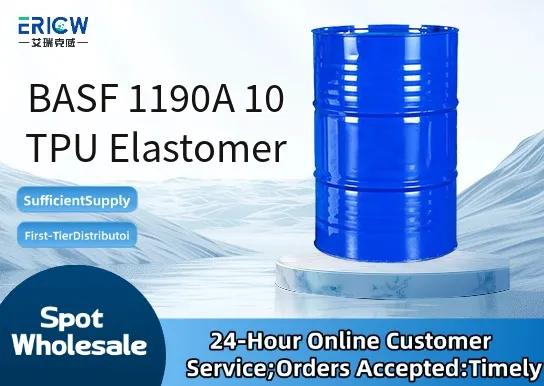
Excellent abrasion resistance for extended service life in demanding mechanical environments.
Outstanding elasticity and recovery performance across a wide temperature range (–40 °C to 80 °C).
Good processability via extrusion, injection molding, and calendering without requiring pre-drying.
High transparency and clarity suitable for aesthetic applications requiring optical quality.
Low compression set ensuring dimensional stability under prolonged static load.
Medical tubing and fluid-handling components compliant with ISO 10993 biocompatibility guidelines.
High-performance seals, gaskets, and dynamic O-rings in automotive and industrial systems.
Transparent protective films and overlays for touchscreens and control panels.
Flexible connectors and strain-relief boots in cable management solutions.
Soft-touch overmolding for consumer electronics housings and ergonomic tool grips.
| Chemical Type | Aliphatic polyester-based thermoplastic polyurethane (TPU) |
| Product Form | Pellets |
| Appearance | Translucent, light yellow granules |
| Primary Applications | Medical devices, seals, transparent films, soft-touch overmolding |
| Key Features | Abrasion resistance, elasticity, clarity, low compression set, melt-processable |
| Benefits | Reduced part wear, consistent performance in cyclic loading, design flexibility for multi-material assemblies |
| Processing Methods | Extrusion, injection molding, calendering |
| Compliance | Meets FDA 21 CFR §177.2400 and EU Regulation (EC) No. 10/2011 for food contact (when processed per BASF guidelines) |
Q1: What is the primary function of BASF 1190A 10 in TPU formulations?
A: BASF 1190A 10 is a specialized polymeric processing aid designed to improve melt flow, reduce extrusion pressure, and enhance surface finish in thermoplastic polyurethane (TPU) compounds—particularly during high-speed extrusion and calendering processes.
Q2: Is BASF 1190A 10 compatible with all TPU chemistries (e.g., polyester-, polyether-, and polycaprolactone-based TPUs)?
A: Yes, BASF 1190A 10 demonstrates broad compatibility across major TPU families. It is especially effective in aromatic polyester- and polyether-based TPUs, where it helps mitigate melt fracture and improves dimensional stability during profile extrusion.
Q3: How should BASF 1190A 10 be incorporated into TPU processing?
A: It is typically added directly to the TPU resin prior to extrusion—either via gravimetric feeding or pre-blending. No pre-drying is required, and it remains stable under standard TPU processing temperatures (160–220 °C).
Q4: Does BASF 1190A 10 affect the mechanical or thermal properties of the final TPU product?
A: At recommended dosage levels, it has minimal impact on tensile strength, elongation, or Shore hardness. Long-term thermal aging performance and UV resistance of the base TPU are also preserved, as BASF 1190A 10 is non-volatile and chemically inert under normal service conditions.
Contact With Us:
E-mail: wangxingqiang@ericwchem.com
Have a Questions? Call Us:
Add:
Building A1, Jiete Industrial Park, Huangpu District, Guangzhou City, Guangdong Province, China