English
 Español
 tiếng việt
 русский
High melt flow index for excellent processability in injection molding and extrusion
Outstanding low-temperature flexibility and impact resistance
Superior compatibility with polypropylene (PP) and polyethylene (PE) for enhanced blend performance
Excellent clarity and gloss for aesthetic-sensitive applications
Good UV stability and long-term weathering resistance
Automotive interior trim components (e.g., instrument panels, door inserts)
Packaging films requiring toughness and seal integrity
Soft-touch overmolding for consumer electronics and appliances
Flexible packaging closures and dispensing systems
Medical device components requiring biocompatibility-supportive formulation
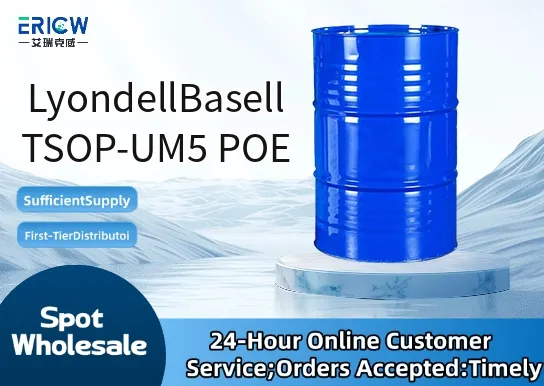
| Chemical Type | Polyolefin Elastomer (POE), ethylene-octene copolymer |
| Product Form | Natural pellets |
| Appearance | Off-white to light beige, free-flowing granules |
| Melt Flow Rate (190 °C/2.16 kg) | 5.0 g/10 min |
| Density (ASTM D792) | 0.868 g/cm³ |
| Hardness (Shore A) | 50 |
| Ultimate Elongation (ASTM D412) | 750% |
| Primary Applications | Toughening agent for PP, flexible packaging, soft-touch overmolding |
Q1: What is the primary function of TSOP-UM5 POE in polymer formulations?
A: TSOP-UM5 POE is a polyolefin elastomer designed to enhance impact resistance and flexibility in polypropylene (PP) and polyethylene (PE)-based systems, particularly in automotive interior parts, packaging films, and durable consumer goods where balanced stiffness-toughness performance is required.
Q2: How does TSOP-UM5 POE differ from conventional EPDM or EPR impact modifiers?
A: Unlike traditional rubber-based modifiers, TSOP-UM5 POE offers superior compatibility with polyolefins due to its ethylene-octene copolymer structure, enabling finer dispersion, improved melt processability, and better retention of tensile strength and surface aesthetics after blending.
Q3: Is TSOP-UM5 POE suitable for use in food-contact applications?
A: TSOP-UM5 POE is manufactured under controlled conditions appropriate for indirect food-contact applications when compounded into compliant final articles; however, regulatory compliance must be verified case-by-case based on the full formulation, processing conditions, and intended end-use requirements.
Q4: What processing methods are recommended for TSOP-UM5 POE?
A: TSOP-UM5 POE is compatible with standard polyolefin processing techniques including injection molding, extrusion, and blow molding. It exhibits good thermal stability and low shear sensitivity, supporting efficient melt blending with PP and PE resins without significant degradation.
Q5: Can TSOP-UM5 POE be used in combination with other additives such as nucleating agents or flame retardants?
A: Yes—TSOP-UM5 POE is generally compatible with common polyolefin additives including nucleating agents, antioxidants, and halogen-free flame retardants; however, additive interactions should be evaluated experimentally to ensure optimal dispersion, stability, and final property balance.
Contact With Us:
E-mail: wangxingqiang@ericwchem.com
Have a Questions? Call Us:
Add:
Building A1, Jiete Industrial Park, Huangpu District, Guangzhou City, Guangdong Province, China